
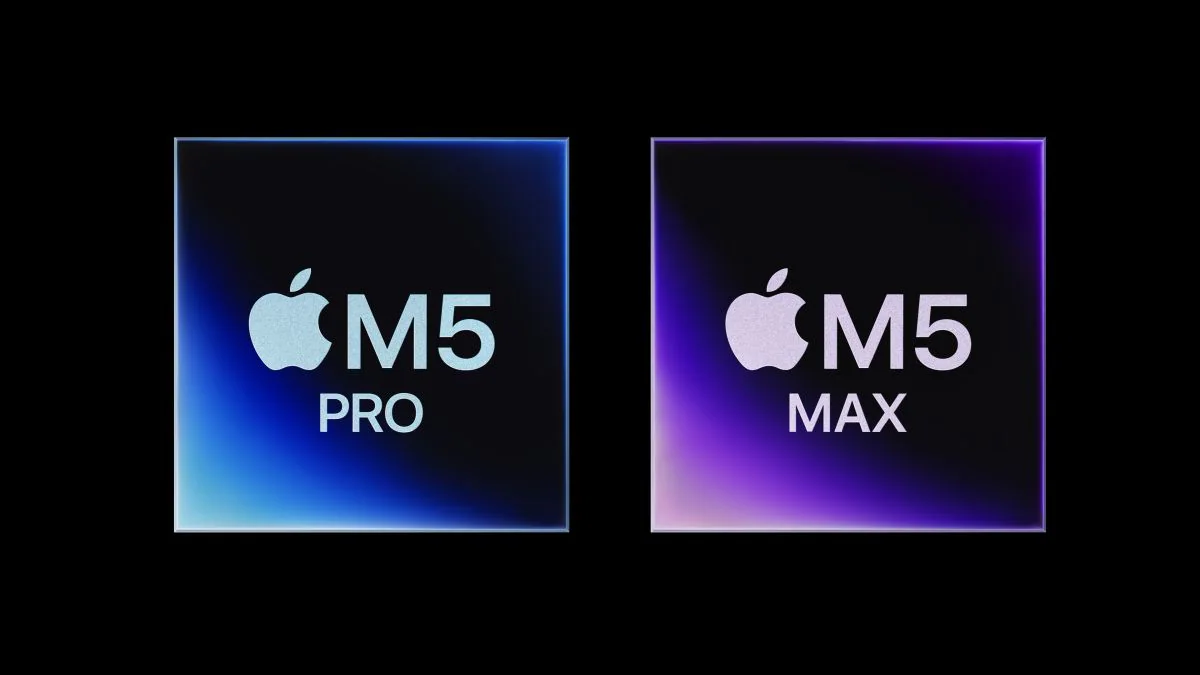
Apple is shaking up its internal silicon strategy, choosing to prioritize the development of an AI-driven “M7” generation of processors over expected iterations, according to reports. To accelerate its roadmap for artificial intelligence, the tech giant is skipping the launch of higher-end M6 models—specifically the M6 Pro and M6 Max—to put all its engineering momentum into the next-generation M7 family.
AI Push Drives Rapid Architecture Shift
According to Bloomberg’s Mark Gurman in his latest Power On newsletter, Apple initiated work on the M7 lineup just six months after starting development on the M6 family. The underlying catalyst is a massive architectural emphasis on AI capabilities. The upcoming M7 processors are slated to receive “major neural-processing upgrades,” positioning them closer to high-end dedicated AI hardware, such as Nvidia’s Blackwell accelerators.
The timeline for the consumer-facing M7 rollout is expected to unfold in stages:
-
First Half of 2027: Launch of the standard M7 processor.
-
Late 2027: Introduction of the M7 Pro and M7 Max systems-on-chip (SoCs).
-
2028: Deployment of the flagship M7 Ultra.
Looking even further ahead, development has already begun on an M8 series—including a chip codenamed “Soko”—tentatively targeted for 2028 to deliver further AI performance jumps.
M7 Ultra to Power Future AI Cloud Servers
Beyond personal computers, Apple’s unreleased silicon will act as the backbone for its upcoming data center infrastructure. The company is actively building AI servers utilizing unreleased ultra-tier processors. An M5 Ultra-based chip (codenamed J246) is expected to debut soon for initial server scaling, while a future server cluster driven by the M7 Ultra is projected to deploy by 2029.
Remarkably, the M7 Ultra-based server configuration is anticipated to support up to 1.5TB of unified memory. This would mark the first time Apple has matched the massive RAM capacity of its Intel-based 2019 Mac Pro desktop, signaling a major leap forward for heavy-duty cloud-computing workloads under Apple’s unified memory architecture