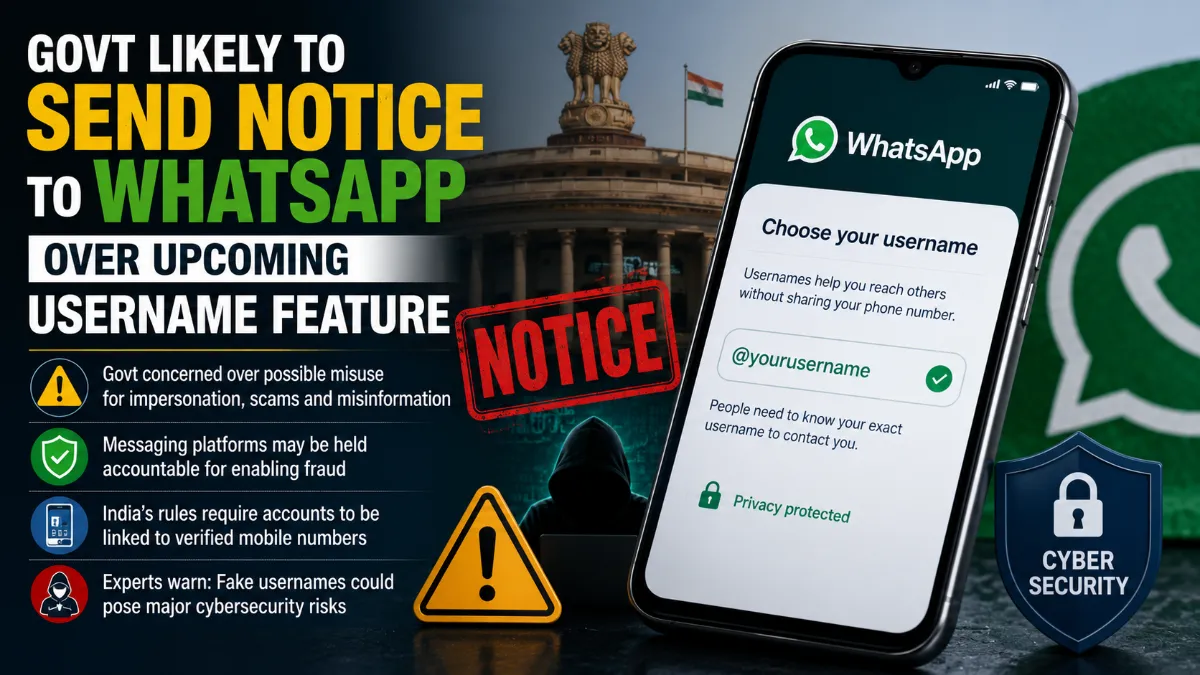
The Ministry of Electronics and Information Technology (MeitY) has officially directed Meta to pause the rollout of its long-awaited WhatsApp “usernames” feature in India. Citing a significant risk to digital security, the government has demanded a detailed technical explanation and documentation from the social media giant within three days, threatening regulatory action under the Information Technology Act, 2000, and IT Rules, 2021.
While Meta has championed the upcoming update as a milestone for user privacy—allowing individuals to initiate conversations using a unique handle instead of revealing their phone numbers—Indian authorities fear it will trigger an aggressive surge in untraceable cybercrimes. Specifically, officials warned that the feature could easily facilitate identity spoofing, phishing attacks, financial fraud, and “digital arrest” scams. The primary concern is that malicious actors might register lookalike usernames resembling major financial institutions, government agencies, or public figures to deceive unsuspecting citizens.
In response to the government’s mandate, a WhatsApp spokesperson clarified that the username functionality is currently in its infancy and is not yet live for general use, though early handle reservations have begun. Defending its deployment strategy, Meta emphasized that the system contains robust, built-in safeguards engineered to minimize impersonation threats. The company has already blocked lookalike variations and preemptively reserved the highest-profile names belonging to celebrities, verified brands, and government entities for their legitimate owners. Furthermore, WhatsApp stressed that a valid phone number will still be mandatory to create an account, and background algorithms will actively monitor and terminate profiles exhibiting abusive patterns. The feature will remain blocked in India until official consultations are concluded to the government’s satisfaction.