

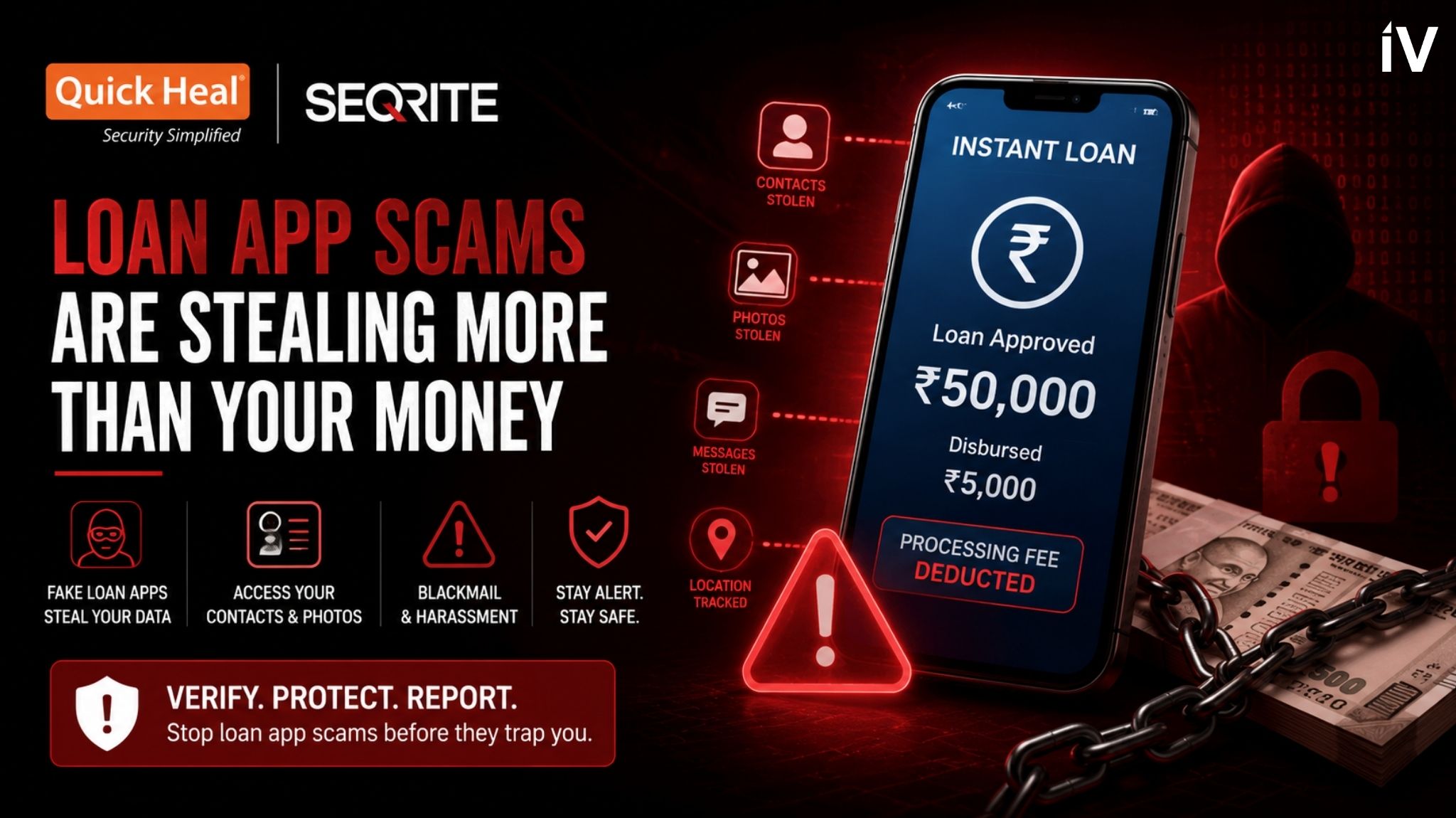
Quick Heal Technologies Limited, a global provider of cybersecurity solutions, has issued a strong consumer warning on the growing threat of loan app blackmail scams in India, where fraudulent lending apps are exploiting urgent financial need to steal personal data, extort victims, and subject them to relentless harassment. The cybersecurity leader pointed out that these scams are not just financial frauds but full-spectrum digital abuse operations that weaponise access to a user’s contacts, photos, messages, and identity.
According to researchers at Seqrite Labs, India’s largest malware analysis facility, these fraudulent apps masquerade as legitimate loan platforms while operating outside proper regulatory oversight. They typically lure users through social media ads, SMS links, or misleading app listings by promising instant approval, high loan amounts, and minimal documentation, but their real objective is to gain intrusive permissions on the victim’s phone. Once installed, the apps often request access to contact lists, photo galleries, text messages, and location data, enabling scammers to copy large portions of a user’s digital life onto remote servers.
Quick Heal Technologies Limited researchers noted that the scam follows a repeatable pattern. A victim may apply for a much larger amount, but only a small portion is disbursed after heavy “processing fees” are deducted upfront. The repayment window is then compressed to as little as six or seven days, often with hidden charges and inflated interest, creating an impossible debt trap almost immediately. If the user misses the deadline, even briefly, the fraud escalates into intimidation, abusive calls, fake legal notices, and threats designed to cause panic and social shame.
What makes these scams especially dangerous is the shift from financial coercion to personal humiliation. When scammers gain access to private photos, they may use AI tools or image manipulation to create obscene or doctored pictures, then threaten to send them to parents, colleagues, spouses, or employers. This psychological pressure is central to how loan app blackmail scams remain profitable, because the victim is often forced into silence by fear rather than by the size of the original loan.
Victims frequently make the problem worse by assuming the amounts are too small to matter or by believing repayment will end the ordeal. In many cases, even after repayment, fraudsters may auto-credit another small amount into the victim’s account without consent and restart the harassment cycle. Others are drawn deeper into the trap by borrowing from multiple apps to pay off the first one, turning a short-term emergency into a spiralling pattern of debt and blackmail.
Researchers at Quick Heal Technologies Limited outlined several red flags consumers should watch for before installing any lending app. These include a seven-day repayment deadline, demands for upfront security or processing fees, missing paperwork such as a loan sanction letter or fair practices code, use of generic support email addresses, and requests for permissions that no legitimate lender should require, especially access to photos and contacts. They also stressed that all lawful digital lenders must be linked to a Non-Banking Financial Company (NBFC) or bank registered with the Reserve Bank of India, and users should verify this independently before proceeding.
To stay safe, consumers are advised to use only official app stores, avoid APK downloads shared over websites or messaging platforms, review one-star complaints rather than relying only on positive ratings, and regularly check phone permissions to revoke unnecessary access. Advanced protection solutions such as Quick Heal AntiFraud.AI add an important preventive layer against such scams by alerting users to potentially fraudulent calls, harmful apps, and malicious links shared over SMS, email, WhatsApp, and other channels. With features such as Scam Protection, Fraud App Detector, Banking Fraud Alert, and Risk Profile assessment, Quick Heal AntiFraud.AI helps consumers spot digital fraud early and act before a loan scam escalates into blackmail.
If a person is already targeted, Quick Heal Technologies Limited recommends stopping payments, uninstalling the app, securing the device, preserving evidence such as screenshots and call logs, and reporting the incident immediately through India’s official cybercrime portal at cybercrime.gov.in. The company also urges victims not to suffer in silence. Informing friends and family early can reduce the power of blackmail, especially when scammers attempt to spread false accusations or manipulated content through contact lists. In more severe cases, temporarily changing or deactivating the phone number associated with the harassment may help break the cycle, as many fraud operators move on once they lose direct access to the victim.