

As AI adoption accelerates across the globe, India is emerging as one of the top destinations to house data centres and cloud computing servers. The Centre has already announced plans to increase AI computing capacity from approximately 38,000 GPUs (graphics processing units) to 200,000 GPUs, highlighting one of India’s biggest public AI infrastructure upgrades. As part of the India AI Mission, this will boost national computing power while supporting startups, enterprises, research labs and public services.
Industry analysts note that thousands of GPUs must run continuously to ensure large-scale model training. Therefore, a strong pan-India AI computing infrastructure is vital to avoid dependence on overseas cloud providers. Given the soaring demand from companies, widespread localisation of infrastructure is key to driving India’s attraction as a top AI hub. This will need massive investments in the creation of hyperscale campuses on barren or unused land, turning these places into data centres or computing zones.
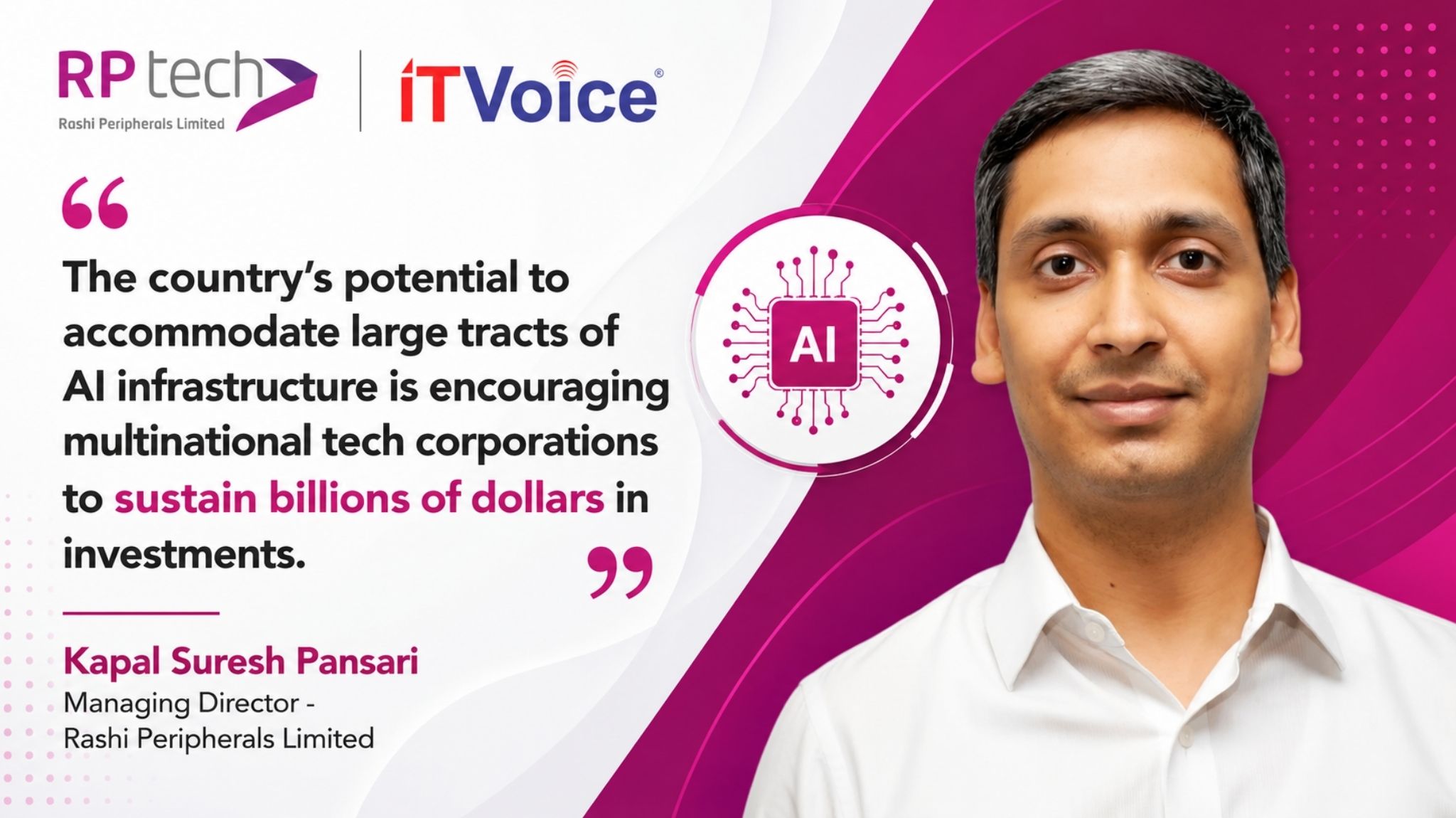
The country’s potential to accommodate large tracts of AI infrastructure is encouraging multinational tech corporations to sustain billions of dollars in investments. While still in its infancy, India’s fast-growing data centre sector is shaping up as its digital support system. The nation’s rising population of more than 1.45 billion people is generating immense local data demand with low-latency needs, as millions of youth enjoy access to free or heavily discounted AI services. Consequently, both large and small companies seek to host data closer to the headquarters to ensure security, speed and legal compliance. This means data sovereignty is extremely essential for AI model privacy and governance.
How HPC Solutions Spur Innovations and Efficiency
Against this backdrop, high-performance computing (HPC) solutions are acting as one of the critical tools to promote the advancement of scientific computing. This is hastening the pace of scientific discovery. Be it weather forecasts and energy exploration, life sciences or computational fluid dynamics, researchers are blending traditional simulations with AI, ML (machine learning), big data analytics and edge computing to uncover the mysteries of our world.
However, while HPC drove engineering innovations and scientific discoveries for decades, it used physics-based simulations to predict weather conditions, understand fluid flow and model molecular dynamics in chemistry. But all that is now changing.
Today, AI is augmenting and replacing sections of HPC simulations based on physics. In this new age, AI-powered workflows for ML and fluid dynamics are accelerating meshing while enhancing turbulence models and creating surrogate copies, driving speedy iterations without the foundation of physics being discarded. Backed by up-to-date AI-centric approaches, physics-informed neural networks and foundation models provide high-resolution predictions with statistical probabilities. Thereby, it achieves what was deemed impossible earlier in scale, speed and efficiency. As the transformation goes beyond the algorithm level, scalability is required throughout the infrastructure.
Personalised PCs with Additional Security
Across industries, the swift deployment of AI applications is fast-forwarding the need for high-performance computing hardware. This includes AI personalised computers, GPUs and enterprise servers. As a result, there is escalating demand for AI laptops and desktop computers, spurred by the requirement for powerful computing solutions from diverse domains. From healthcare and agriculture to BFSI, manufacturing and education, demand is soaring for investments in AI-driven technologies and hardware upgrades that boost productivity and streamline operations.
Through the integration of AI, PCs are delivering extremely personalised experiences while enhancing creativity and productivity in an unprecedented manner. This simplifies research and data analysis, making daily tasks easier and providing users with extra time for more important matters. AI PCs ensure extremely good performance, greater battery life and increased productivity levels, priming them particularly to assist start-ups, creators, gamers, IT professionals and the gig economy. Creators and streamers can use devices with AI-improved audio and video features to transform content creation and audience engagement. Such PCs have an additional level of security since the operations are not on cloud. Thereby, users can maximise productivity without undue worries of any breaches.
The Challenge and the Opportunity
Demand for AI-ready hardware is also increasing as companies upgrade infrastructure for data modelling, automation and real-time decision-making. A crucial innovation in AI PCs is the creation of NPUs (neural processing units). NPUs reduce dependence on CPUs (central processing units) and GPUs since routine tasks are automated, letting users pay attention to more intensive processes. Given these benefits, more users have been choosing AI PCs. The demand is huge, however, since barely 11% of homes in India own a PC, which is roughly one PC per family.
But there are challenges in capturing this market as it calls for smooth integration with AI software systems. Accordingly, hardware manufacturers must focus on compatibility and customisation to facilitate seamless integration with AI software networks and tools. Offering bespoke hardware solutions as per customers’ specific needs will boost performance and fast-forward the deployment of AI technology. With the expanding use of NPUs, AI integration in CPUs has helped boost battery performance and curb power consumption, allowing consumers to use devices for much longer durations without frequent recharging.
Prioritising Safeguards for a Secure Outlook
Finally, alongside performance and compatibility, hardware makers must prioritise security. This should include implementation of end-to-end data security via secure enclaves, encryption and trusted execution environments that protect data during processing, transmission and storage. AI-centric security protocols are imperative to safeguard sensitive data, especially in distributed and edge environments.
Proactive collaboration with software service providers and periodic security audits are also critical to pinpoint and address vulnerabilities, ensuring hardware is safeguarded from evolving threats. If these issues are addressed, AI-ready hardware will propel the next growth wave of India’s IT channel in the years ahead.