



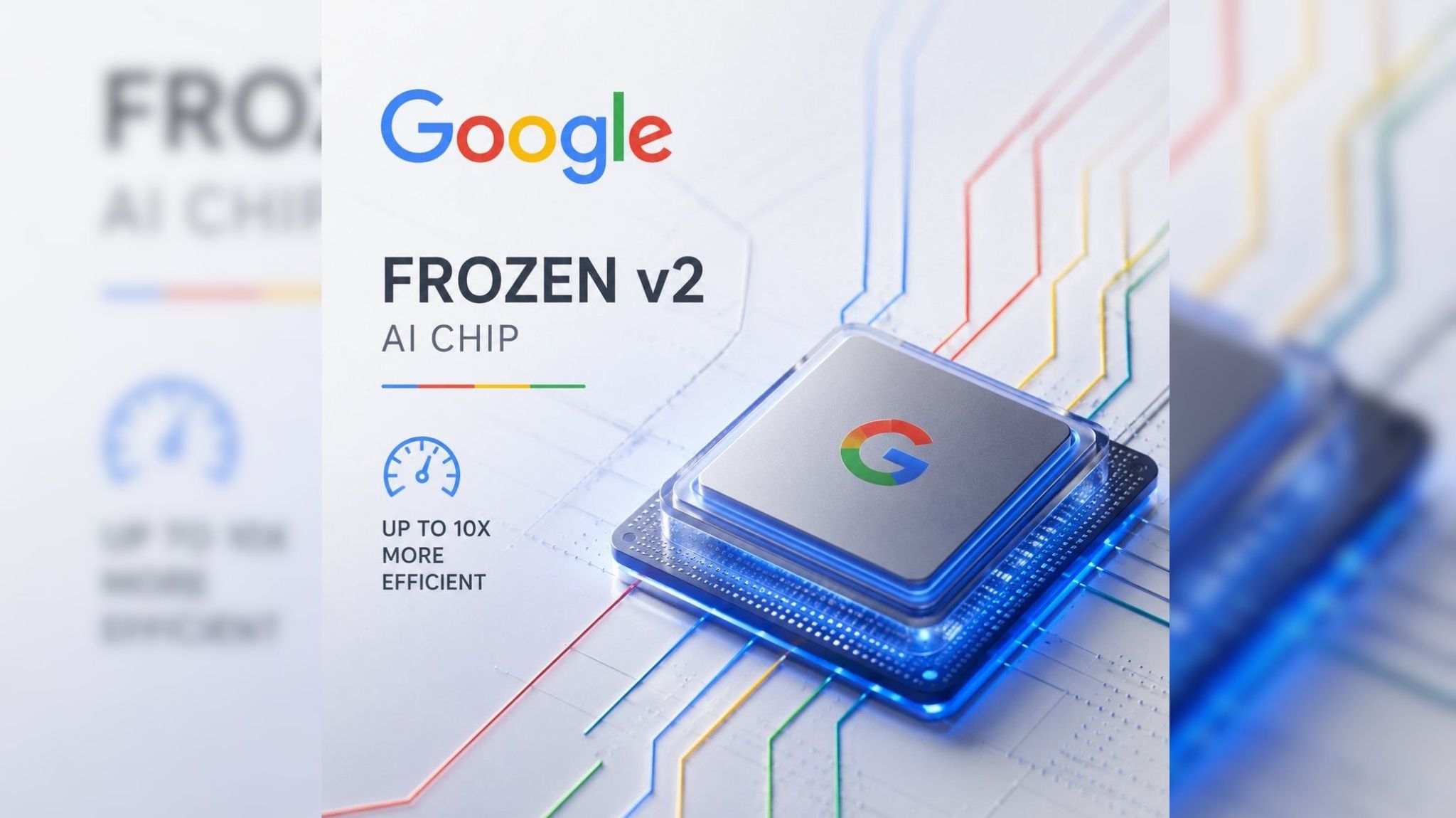
Google is reportedly working on a new generation of custom artificial intelligence hardware designed to improve the efficiency of its Gemini AI models. According to a report by The Information, the company is developing a server chip internally codenamed “Frozen v2”, which could incorporate certain elements of AI models directly into the hardware.
The reported initiative highlights Google’s growing focus on designing specialised computing infrastructure to support the rapidly increasing demands of generative AI. By integrating parts of the AI model into the chip itself, Google could potentially reduce the computing resources required to process AI workloads and improve performance for users.
The proposed chip is reportedly being developed to address growing constraints in AI computing capacity. These limitations have affected the availability of infrastructure, with Google Cloud facing challenges in accommodating demand from external customers as the company continues to support its own expanding AI operations.
According to the report, Google could begin deploying the new hardware as early as 2028. However, the design is still under development, and engineers are reportedly working on determining how much of the AI model’s information should be embedded directly into the chip.
One of the most notable claims surrounding Frozen v2 is its potential efficiency advantage. The chip is reportedly expected to deliver between six and 10 times greater efficiency than Google’s latest custom AI chips when measured in terms of AI tokens processed for each unit of power consumed. If achieved, such improvements could have a significant impact on the cost and energy requirements of operating AI models at scale.
Google has not publicly confirmed specific details about the reported chip. A Google Cloud spokesperson, however, said the company’s teams are continuously researching new innovations and that co-designing hardware and software enables the development of tightly integrated and optimised systems.
The reported Frozen project is also not expected to replace Google’s existing Tensor Processing Units (TPUs). Instead, the new chip family could operate alongside TPUs and be designed for specialised workloads, particularly certain AI inference tasks where dedicated hardware could deliver greater efficiency.
Google has already established a strong presence in custom AI silicon through its TPU platform. These processors are used to support the company’s internal AI workloads as well as services offered through Google Cloud. The development of another specialised chip family would indicate that Google is looking to further diversify and optimise the hardware infrastructure powering its AI ecosystem.
The move comes as technology companies worldwide continue to invest heavily in AI infrastructure. The growing demand for advanced processors and data-centre capacity has transformed the semiconductor industry, while also increasing pressure on companies to demonstrate that massive investments in AI hardware can deliver sustainable returns.
For Google, developing specialised chips could offer greater control over the performance, energy consumption and operating costs associated with its AI services. As models such as Gemini become more sophisticated and are used by a growing number of users, improving the efficiency of AI inference is likely to become increasingly important.
If the reported timeline materialises, Frozen v2 could represent another step in Google’s long-term strategy of combining AI software with purpose-built hardware. Rather than relying solely on general-purpose computing infrastructure, the company appears to be exploring deeper hardware-software integration to meet the demands of the next generation of AI applications.