
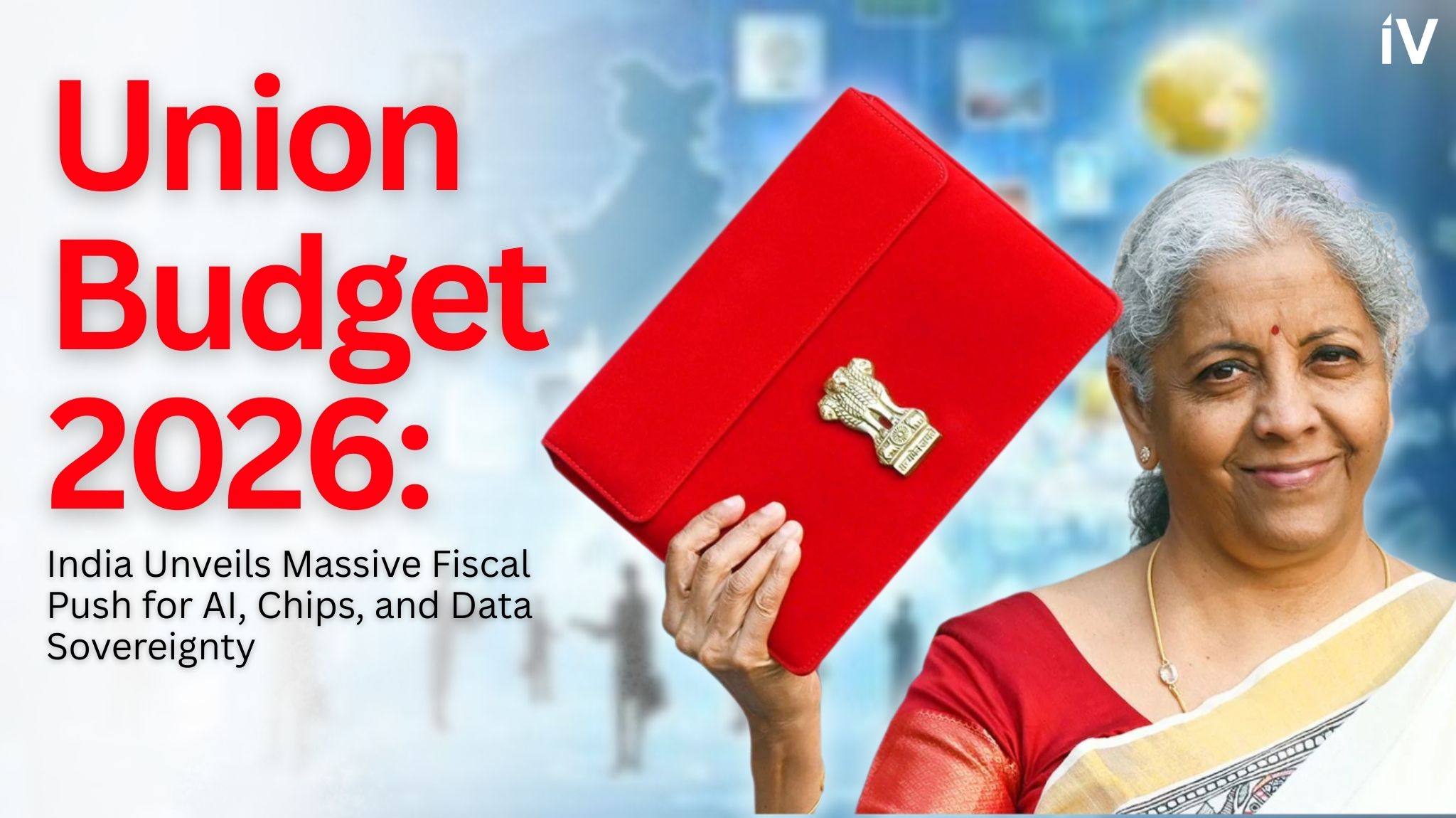
The Union Budget 2026-27, presented by Finance Minister Nirmala Sitharaman, has set a bold roadmap for India’s digital future. With a clear focus on “Sovereign AI” and self-reliance, the government has introduced sweeping fiscal measures aimed at transforming the country from a consumer of global technology into a primary manufacturing and innovation hub. This year’s budget highlights a strategic shift toward high-performance computing, semiconductor self-sufficiency, and massive infrastructure incentives for global tech giants.
The Rise of the IAIRO and Sovereign AI A cornerstone of the Budget is the formal launch and funding of the Indian Artificial Intelligence Research Organization (IAIRO). Moving beyond strategy, the government is now funding the execution of indigenous AI models. By investing in domestic large language models (LLMs) and massive compute clusters, India aims to reduce its reliance on foreign proprietary AI. This move ensures that AI development is tailored to India’s diverse linguistic landscape while maintaining strict data sovereignty.
Semiconductors and the “Silicon Heartland” Vision The Budget has significantly increased the outlay for the India Semiconductor Mission (ISM). To accelerate the establishment of fabrication units (Fabs), the government announced reduced customs duties on critical machinery and raw materials used in chip manufacturing. This is part of a broader plan to position India as a global “Silicon Heartland,” attracting both domestic players and international firms to set up end-to-end semiconductor supply chains within the country.
The 2047 Cloud Tax Holiday In perhaps the most discussed move, the Budget offers a tax holiday until 2047 for foreign cloud service providers that utilize Indian data centers to serve global markets. By providing two decades of tax certainty, the government is incentivizing “Big Tech” hyperscalers to move their global workloads to Indian soil. This is expected to trigger billions in investment for data parks and create thousands of high-tech jobs, while simultaneously lowering “compute” costs for local Indian startups.
Digital Infrastructure for the Masses Finally, the Budget emphasized expanding the India Stack. New allocations were made to integrate AI into public sectors like agriculture, healthcare, and education. By making high-speed connectivity and AI-driven governance tools more accessible, the 2026 Budget ensures that the “Digital India” vision reaches the last mile, securing India’s place as a global leader in the Fourth Industrial Revolution.