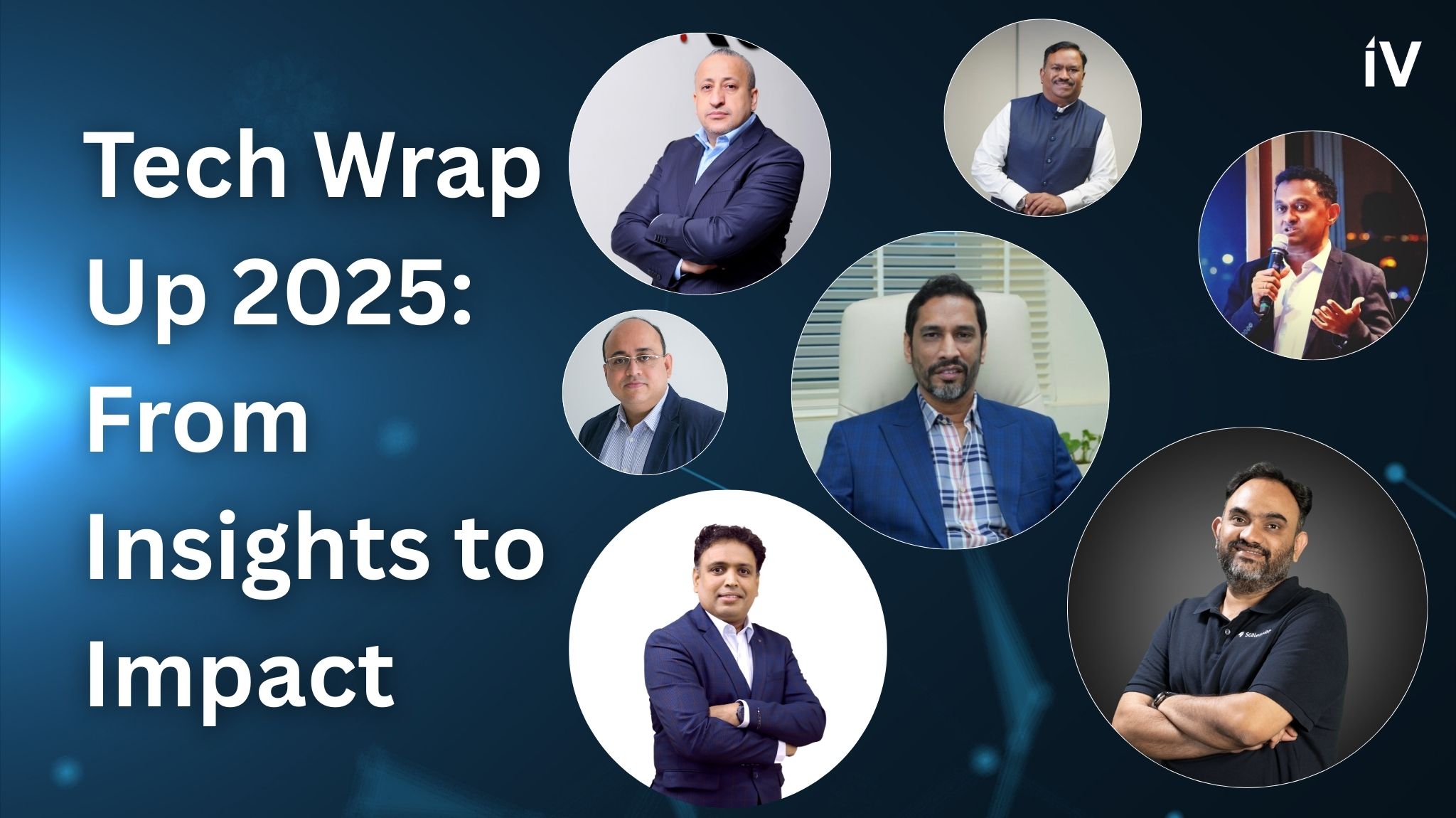


“In India, AI is moving from experimentation to enterprise-scale transformation, and the real differentiator will be the strength of the infrastructure powering it. As organizations rethink their architectures, build AI-ready data platforms and adopt agent-driven operations, they’re recognizing that speed, control and resiliency matter more than ever.
At Dell, we’re helping customers modernize with hybrid, high-performance AI infrastructure, from validated future ready AI factory architectures to data management, governance and power-efficient and cooling designs. The next 18 months will reward enterprises that act decisively on modernization and sovereignty, and India has a unique opportunity to lead. Those who invest now will define the country’s next decade of digital growth”

“In 2025, data security and digital trust advanced significantly in India and the broader APAC region. There was rapid adoption of encryption, tokenization, and hardware-backed key management across banking, payments, fintech, and government platforms. Regulatory momentum from the Data Protection and Digital Privacy Act, along with guidance from the Reserve Bank of India and CERT-In, drove this shift. Organizations moved from pilot projects to large-scale security deployments. However, many organizations underestimated the complexity of implementation. Enterprises struggled with data discovery, cryptographic sprawl across both cloud and on-premises environments, and managing large-scale third-party risks. Compliance was often treated as a deadline-driven task instead of a fundamental architectural transformation.”

AI scale meets rising security and resilience demands
“2025 highlighted both the promise of AI and the mounting pressures felt across sectors—from security and cybersecurity to healthcare and beyond. Over the past year, organisations across industries accelerated their adoption of AI for automation, decision intelligence, and operational efficiency, even as they navigated increasingly sophisticated, persistent, and unpredictable threats and disruptions. This dual trajectory has reshaped expectations for 2026, where AI will continue to drive scale, speed, and innovation across every digital ecosystem. As an industry-agnostic solutions provider, we see this shift impacting all sectors alike: the need for continuous intelligence, resilient architectures, and adaptive, self-learning systems is no longer limited to one domain. The path ahead is a transition from fragmented, reactive approaches to integrated, AI-powered frameworks that uphold trust, reliability, and long-term digital growth.”

“2025 marked a decisive shift in India’s workforce transformation—AI evolved from experimentation to a strategic enabler of personalized learning and skills development. We witnessed data-driven, adaptive learning pathways replace traditional one-size-fits-all approaches, while organizations accelerated their transition to skills-first hiring frameworks over credential-dependent models.
As we enter 2026, our focus is embedding lifelong learning as a continuous, seamless part of professional growth. The future demands an AI-human partnership—where technical proficiency complements irreplaceable human capabilities like critical thinking, adaptability, and complex problem-solving. At Pearson, we remain committed to empowering this balance and equipping India’s workforce with the skills that truly drive both individual success and national competitiveness.”

“As the year closes, Rohit Aradhya, VP and Managing Director, App Security Engineering at Barracuda Networks, highlighted cybersecurity practices for enterprises to follow in 2026. “Tools don’t create cyber resilience, strategy does.
For example, when AI becomes part of how you detect, respond and learn, it transforms operations, it stops being an add-on and becomes a force multiplier and helps to address sophisticated AI driven ransomware attacks.” “In an age of AI and quantum disruption, the best defence won’t be technology, it will be a security-aware culture of learning, agility, adaptability and purpose driven talent.”

“As we look back on 2025, Scalefusion reached several major milestones by unifying IT operations, security, identity, and endpoint management into a single platform. This move eliminated tool silos, automated routine IT tasks, streamlined device signal-driven conditional access, and made compliance simpler – delivering clear efficiency gains for clients managing hybrid workforces across multiple OS environments in more than 124 countries.
The year exposed rising tool fatigue and cost pressure, pushing companies to consolidate platforms to cut complexity while enforcing zero-trust access. By building strategic local partnerships, we navigated region-specific compliances and enabled smooth global expansion.
Looking to 2026, we anticipate rapid growth in customizable, industry-specific UEM solutions with robust multi-OS support and user-centric management. AI-driven automation and predictive security will stay central, turning endpoint management into a proactive, strategic asset that reduces IT complexity while protecting against new threats”