When Amazon Prime Day returns on June 23–26, 2026, more than 25 countries will take part in one of the largest shopping windows of the year. Spanning millions of products and generating billions of dollars in transactions in just 96 hours, the event is as lucrative for cyber criminals as it is anticipated by consumers. Major retail moments bring together the three ingredients’ attackers exploit most: a globally trusted brand, time-limited urgency, and massive purchase intent at scale. The result is predictable — phishing emails, fake websites, fraudulent offers, smishing campaigns, and account takeover attempts impersonating Amazon all surge during this period. What stands out in 2026 is the scale of the infrastructure Check Point Research (CPR) has already observed in the months leading up to the event.
Industries on the Front Line
The pressure isn’t only on shoppers. The sectors that power Prime Day checkouts are seeing some of the year’s sharpest increases in attack activity. In May 2026, Financial Services organizations recorded an average of 1,939 weekly attacks per organization — an 8% year-over-year increase, four times the all-industry baseline of +2%. Consumer Goods & Services organizations — including internet retailers and online storefronts — recorded 1,809 weekly attacks, up 4% year-over-year.
The message for businesses: Prime Day isn’t just a marketing moment — it’s a measurable spike in attempted intrusions across the entire retail value chain.
A Six-Month Build-Up of Malicious Infrastructure
Prime Day fraud isn’t improvised on the day of the event. It’s a calendar-driven operation. Between December 2025 and May 2026, 6,843 new Amazon-themed domains were registered worldwide. Activity ramped sharply in early 2026 and peaked in April 2026 at 1,446 new domains in a single month — roughly two months ahead of Prime Day, giving attackers exactly the window they need to “age” malicious domains so they slip past reputation-based filters by the time the event goes live. May 2026 added another 1,267 domains to the pile.
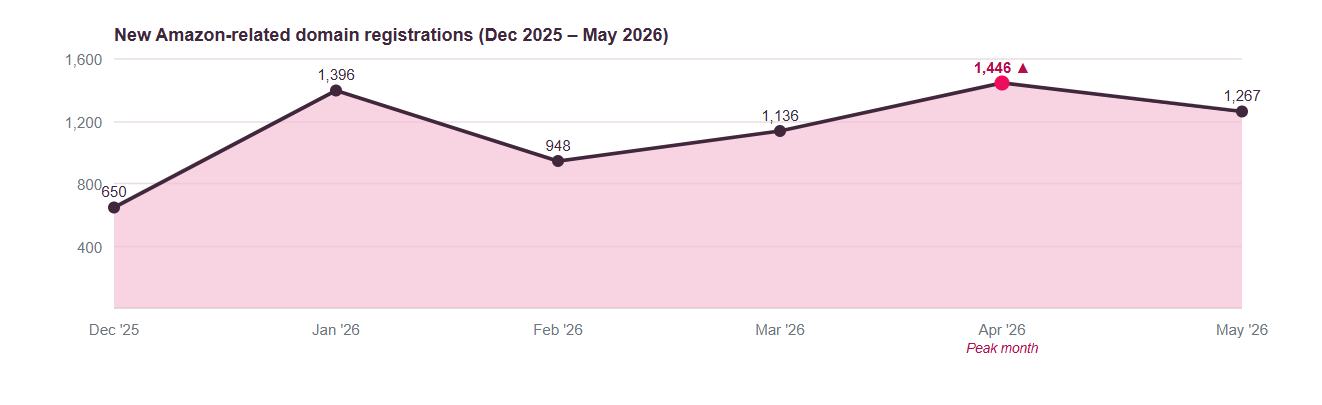 How risky are these new domains? In May 2026, 9.2% — roughly 1 in every 11 — were already classified as malicious or suspicious by Check Point Research. Even in the first week of June 2026, when only 241 new domains appeared, about 1 in every 13 was already flagged.
This pattern reflects a broader build-up of malicious infrastructure ahead of the event, with multiple Amazon-themed domains designed to exploit brand trust, urgency, and high purchase intent at scale.
Two Coordinated Campaigns Targeting Prime Members
CPR has identified two organized domain-squatting operations specifically engineered for Prime Day-style interception.
- The “Amazon Prime” multi-TLD campaign registered six domains following the template amazon-prime.[TLD] — varying only the extension (.help, .cam, .cc, .club, .app and .buzz). Five of the six are already classified as malicious, and the .buzz variant was registered fresh in June 2026 as the event window opened. The goal is simple: intercept Prime members no matter which extension they type, and keep phishing pages alive even if individual domains are taken down.
- The “amazoncredito” multi-TLD campaign is larger and regionally targeted. Forty-six domains were registered in May 2026 around the core name amazoncredito — “Amazon credit” in Spanish and Portuguese — designed to lure Latin American and Spanish shoppers with a fake Amazon promotional credit. A parallel set of domains uses the IDN-encoded variant xn--amazoncrdito-ieb, which renders in browsers as amazoncrédito with an accent — making the spoof significantly more convincing to native speakers. TLDs span .com, .credit, .deals, .money, .shopping, .gratis, .cl, .vip and more.
Fake Storefronts and Counterfeit Product Pages: What Shoppers Are Really Seeing
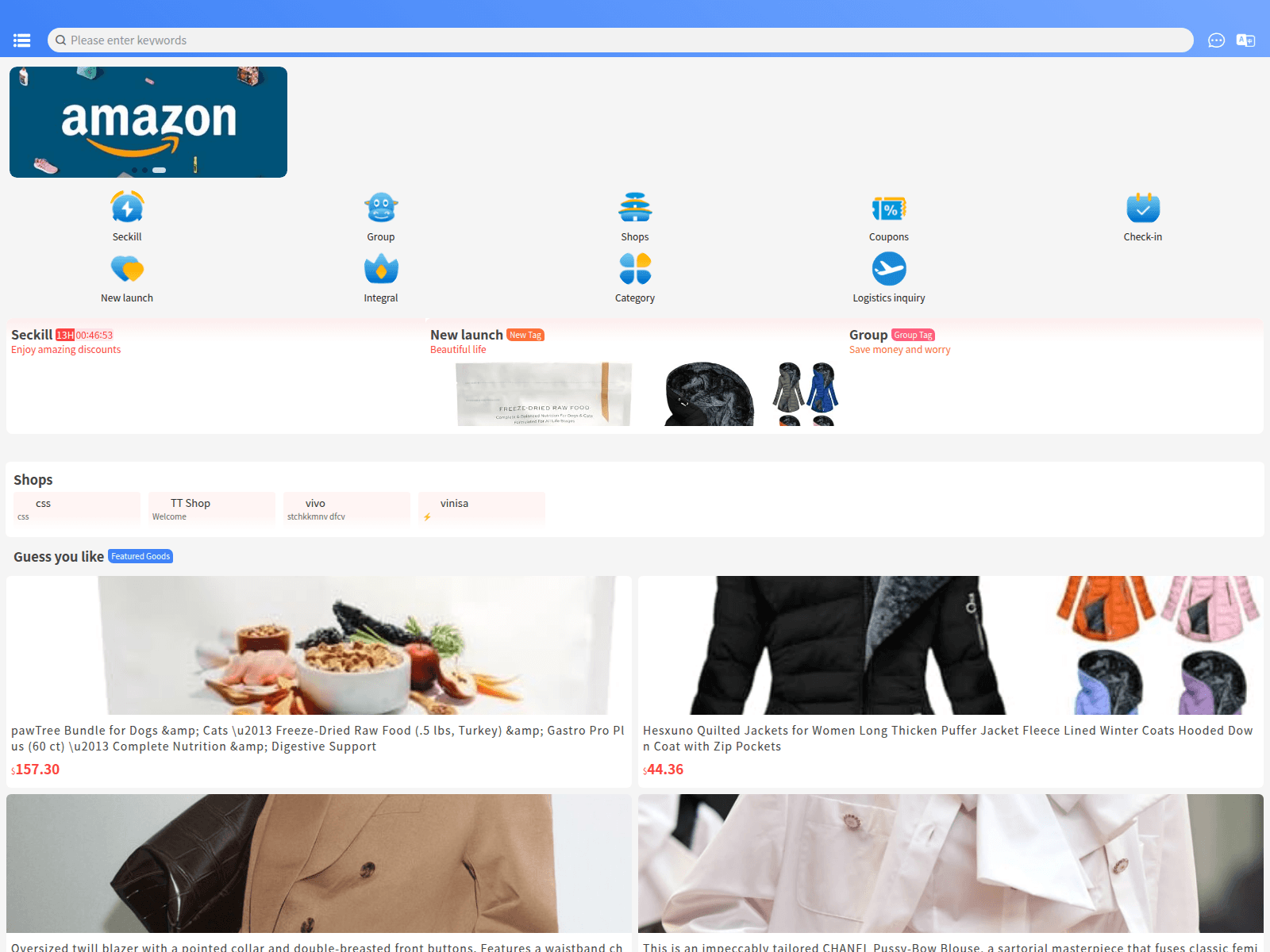
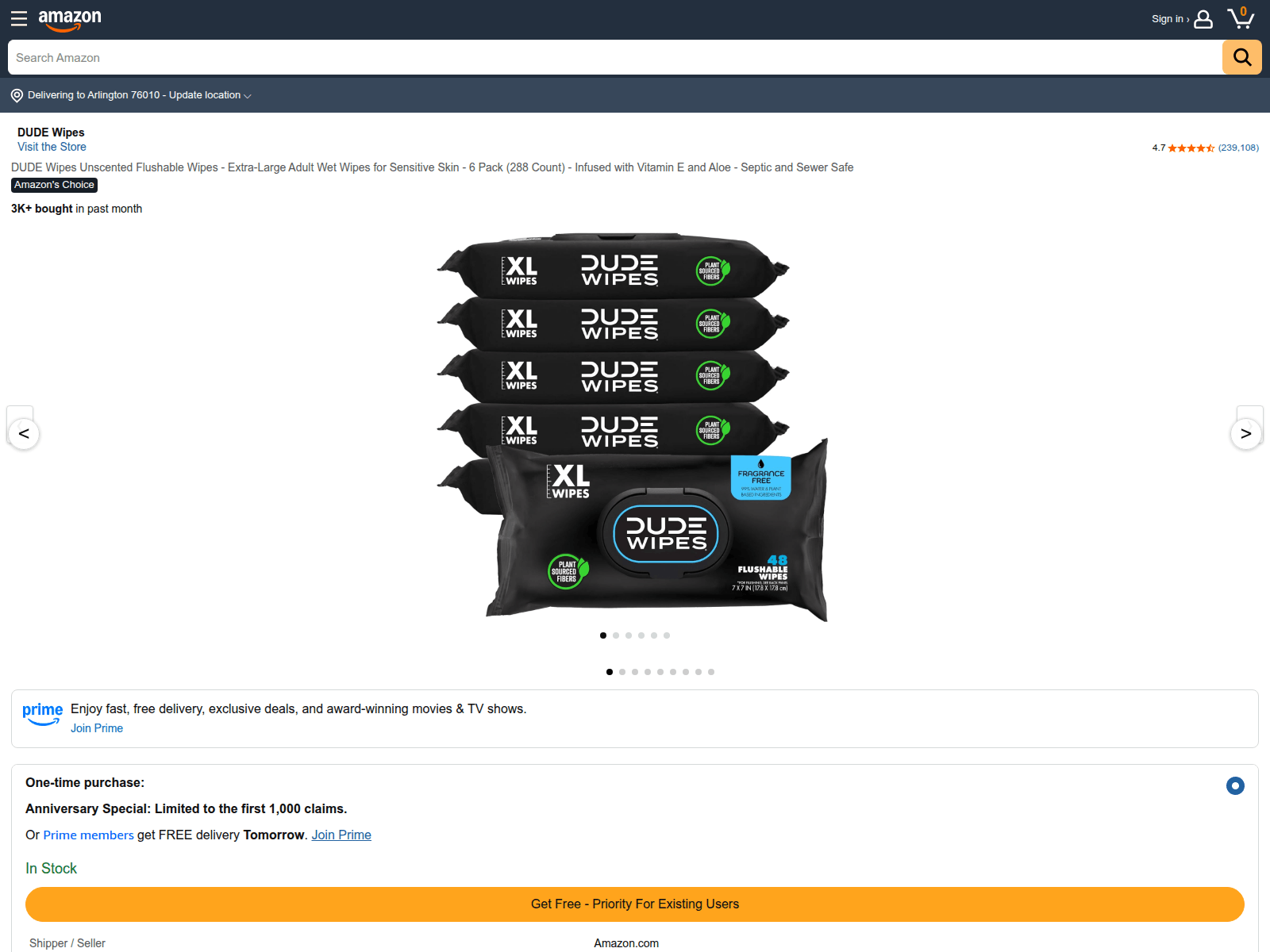
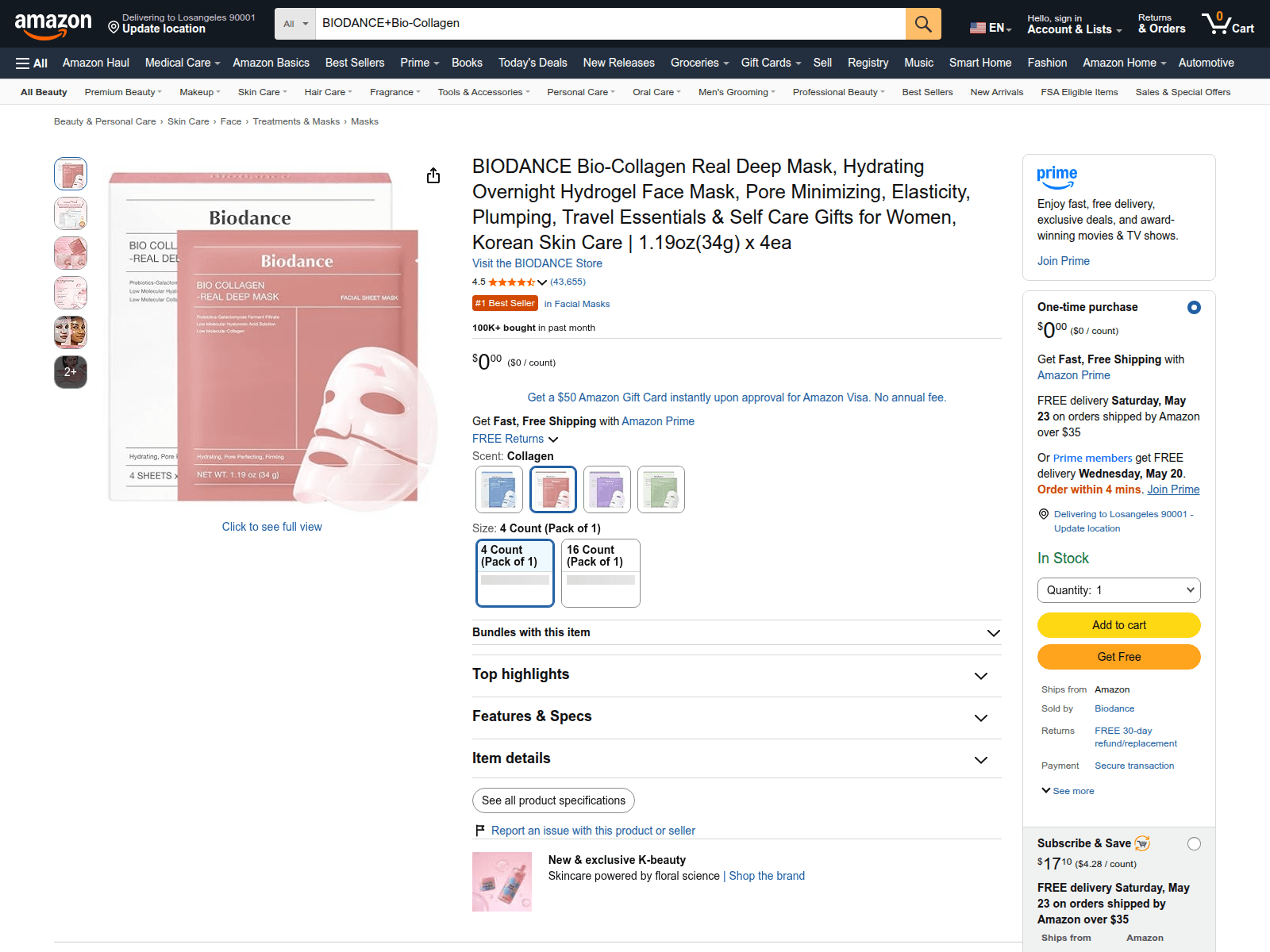
Beyond fake sign-in pages, cybercriminals are now creating entire fake shopping experiences that look and feel like Amazon — making them especially dangerous during Prime Day, when shoppers expect discounts, vouchers, and limited-time offers. In several cases observed ahead of Prime Day 2026, attackers built full lookalike Amazon storefronts designed to trick shoppers into browsing, clicking, and buying on fraudulent sites:
- amazonashop[.]shop (registered May 2026) copies the full Amazon marketplace experience — including the familiar orange branding, category menus, product banners, and item listings — to intercept shoppers who click on ads, social posts, or mistype a web address.
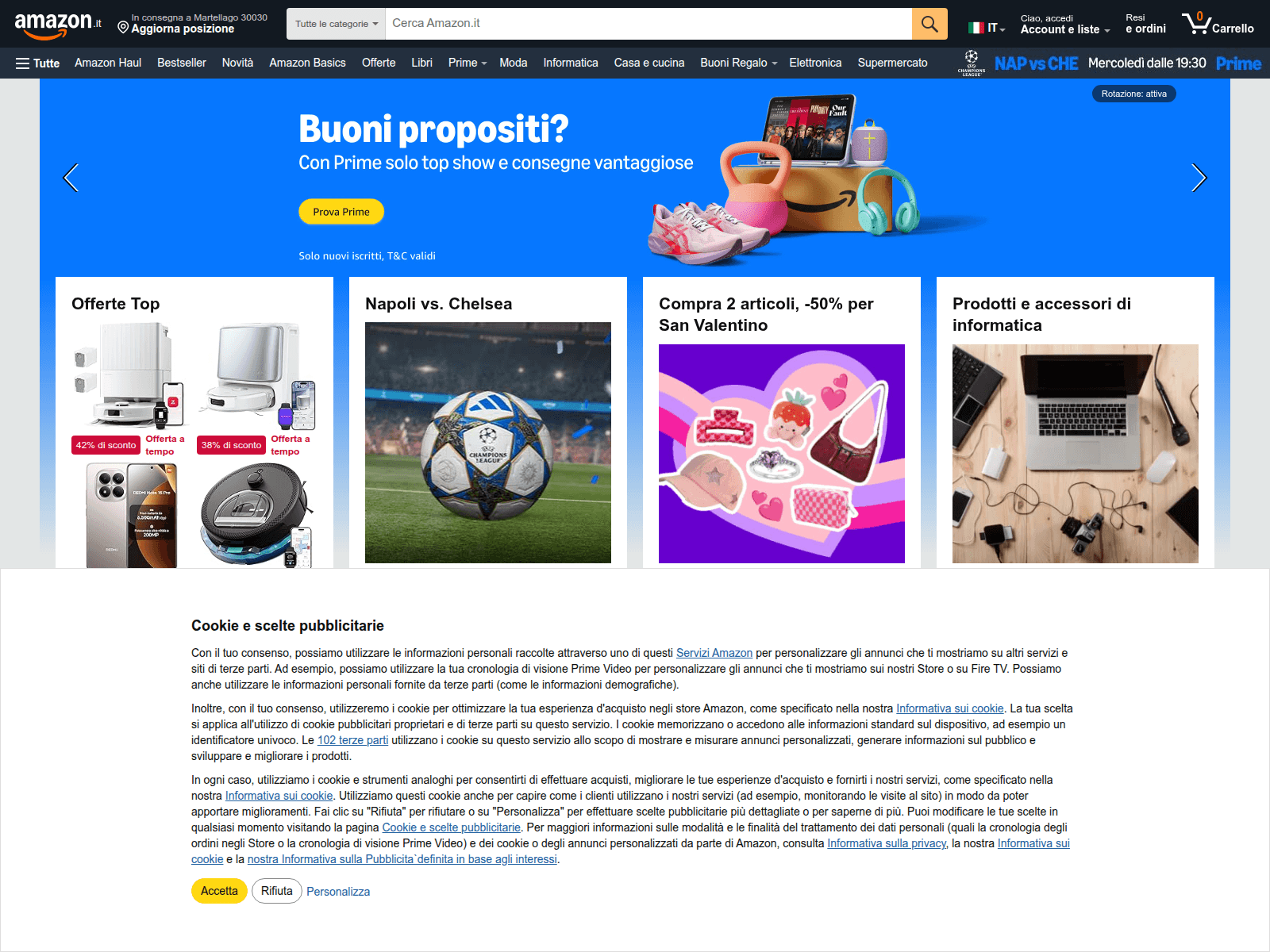
- amzn-buono[.]click (registered January 2026) targets Italian Prime members, presenting a fake Buoni propositi promotional voucher page timed around Prime Day announcements to lure users with the promise of special credits or rewards.
- amazon-express[.]click (registered May 2026) displays a convincing product page but injects fake urgency messages such as “Anniversary Special: Limited to the first 1,000 claims” alongside a suspicious “Get Free — Priority For Existing Users” button, pushing shoppers to act quickly without double-checking.
- amazon-club[.]click (registered April 2026) closely mirrors a real Amazon skincare listing, complete with star ratings, review counts, Prime delivery messaging, and even an “Amazon’s Choice” badge — all designed to build trust before quietly capturing payment information.
How Consumers Can Reduce Prime Day Cyber Risk
Prime Day scams succeed because they mimic normal shopping behavior so closely: familiar branding, convincing checkout pages, delivery alerts, and last-minute urgency. That is why the safest approach is not only to spot suspicious messages, but to slow the purchase journey down just enough to verify what is real before clicking, logging in, or paying.
A few simple habits can make a significant difference during high-traffic retail events:
- Verify the web address. Many fraudulent domains closely imitate Amazon’s real URL. Look out for extra characters, hyphenated brand names, or unusual endings such as .top or .online.
- Avoid clicking links in emails. If you receive a message about your Amazon account, open your browser and navigate directly to the official Amazon website, or use the Amazon app.
- Do not rely on the padlock alone. HTTPS only confirms that the connection is encrypted, not that the website is legitimate. Always double-check the full URL.
- Use strong, unique passwords and enable two-factor authentication (2FA). A password manager can help generate and store strong credentials, while 2FA adds an essential layer of protection against account takeover.
- Be cautious of urgency or pressure. Messages threatening account suspension, refund problems, or time-limited offers are common tactics used to push users into acting without thinking.
- Be skeptical of unrealistic discounts. Offers that appear far below market value—particularly outside Amazon’s official platform—are often used as bait, especially for luxury goods or electronics.
- Use secure payment methods. Whenever possible, choose credit cards, virtual cards, or trusted payment services. These options offer stronger fraud protection and easier dispute processes.
For consumers, Prime Day should remain about convenience and value—not unnecessary exposure to fraud. A few extra seconds spent checking a URL, ignoring a suspicious message, or using a safer payment method can be enough to avoid a costly mistake. In a threat landscape built on speed and impersonation, caution remains one of the most effective forms of protection.