
Every AI vendor is talking about agents – autonomous systems that handle complex tasks without constant human input. The promise is real. But one question gets asked too rarely: what makes an agent reliable enough to trust with your network security?
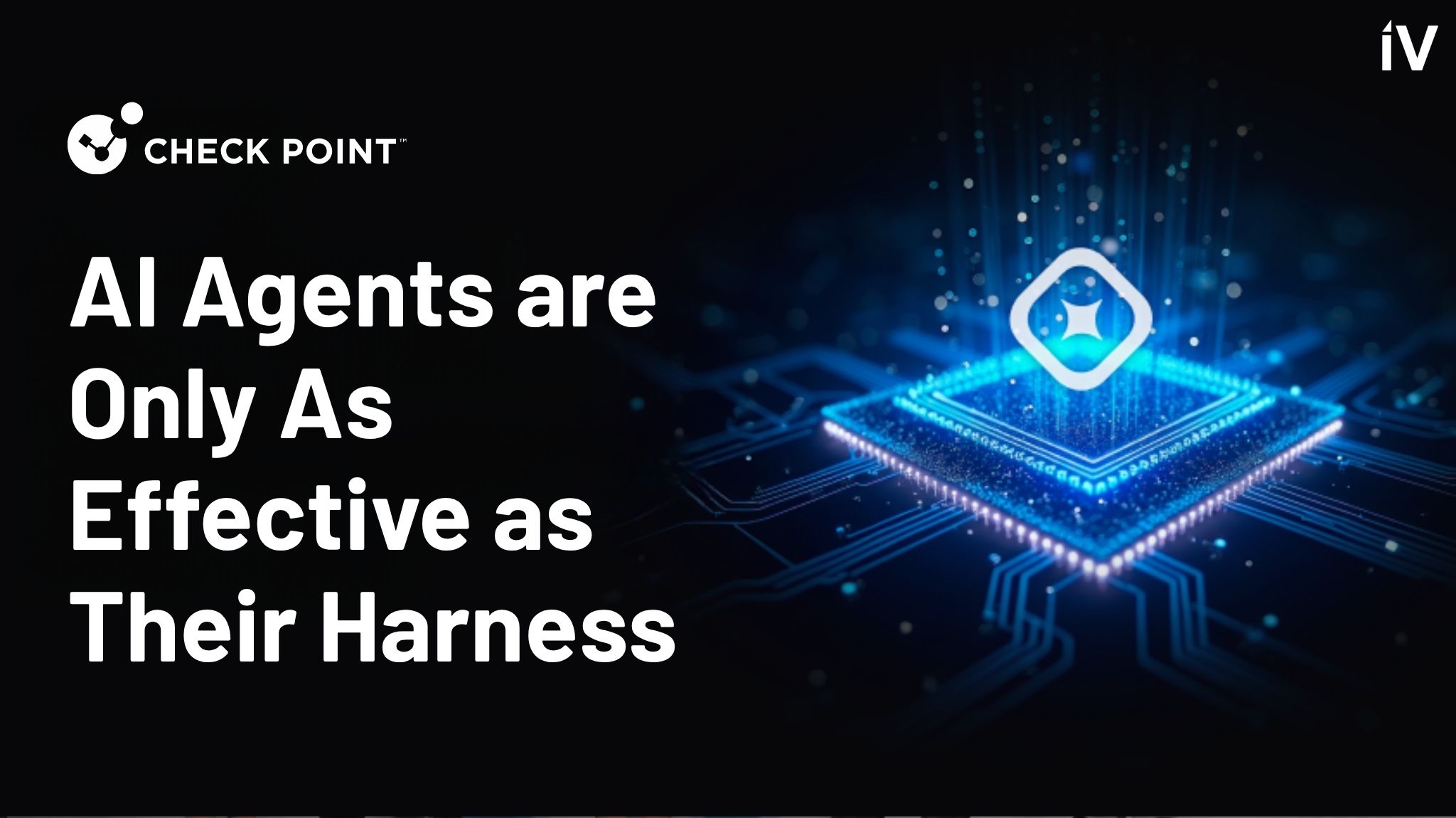
The answer isn’t the model. It’s the harness.
Agents Run on LLMs. Reliability Runs on Something Else.
AI agents get their reasoning power from large language models (LLMs). LLMs are impressive. They understand context, reason through complex problems, and plan across a wide range of tasks.
But on its own, an LLM is a generalist. It knows a little about everything and not enough about your environment. Left ungrounded, it hallucinates — confident outputs that are simply wrong. In a chatbot, that’s an inconvenience. In network security, it’s a risk you can’t accept.
What separates a capable AI agent from a reliable one is how it’s harnessed. Three elements define that harness: Skills, Tools, and Context.
Get all three right, and the agent is accurate and trustworthy. Get one wrong, and you’re back to hallucination, just with more steps in between.
Why Generic AI Gets the Harness Wrong
A general-purpose agent applied to network security borrows a harness built for everything and uses it where precision matters.
Generic models handle generic cases. They’ve never seen the edge cases of mature environments – decade-old rules nobody remembers, multi-vendor dependencies that break in non-obvious ways. They work from static training data, with no sense of what “good” looks like at scale.
The result is automation that works in demos and fails at scale.
What a Reliable Harness Needs to Get Right
Reliability doesn’t come from a bigger model. It comes from how you build the three parts of the harness – skills, tools, and context.
Build skills on real experience. Skills should encode expertise earned in production, not theory from generic training data. The ones that matter capture the hard cases – the quirks and edge conditions that only surface in mature environments. That depth is what teaches an agent what “good” looks like.
Build tools to serve the agent. Not everything is done by LLM, and tools are essential to allow it to fetch data, reduce it for practicality and prepare it for the model. Tools could be as simple as API calls or be sophisticated and include complex Machine Learning algorithms. In any case, that’s another place where your expertise should be embedded to provide domain-specific capabilities to the agent.
Give the agent a live view of the environment. An agent is only as accurate as the picture it works from. Don’t rely on static snapshots or stale exports – they drift out of date the moment they’re taken. Tools should read the environment as it exists right now – topology, dependencies, policies, traffic – and act on it.
Get these three right, and the harness becomes the source of reliability – not the model underneath it.
How Check Point Builds the Harness
Check Point built its agentic platform on exactly these principles, on the same LLM foundation as any other system. The difference is a harness built from assets that a generic AI vendor cannot replicate.
Skills from 30 years of real deployments. Our Agent Skills draw on more than three decades of protecting over 100,000 organizations across every industry and geography. That history encodes the hard cases – the configurations and edge cases that only appear in complex, mature environments. When your network has a quirk, our agents have seen it before.
Tools that build a live picture of your network. At the center is a proprietary Network Knowledge Graph – a continuously updated model of your environment: topology, flows, dependencies, firewall policies, and real-time traffic. Our agents don’t reason over stale data. Instead, they reason over your network as it exists right now. A semantic layer reads not just the syntax of your policies but the intent behind them – even rules written decades ago – across multi-vendor environments.
Context that keeps every decision grounded. The Network Knowledge Graph, combined with Check Point’s proven best practices, your own security guidelines, and regulatory requirements, serves as a dynamic context for every agent’s action. Agents reason from your environment – your topology, your policies, your risk posture – not from general knowledge. That’s what eliminates hallucination in practice and keeps output auditable.
The Harness Is the Differentiator
LLM intelligence is widely available – but it is how you direct that power that matters. 30 years of institutional knowledge encoded into skills, a live graph of your specific network, and the expertise to know what accurate results look like across 100,000 deployments make the difference.
That’s the Check Point harness. And it’s why agentic network security, done right, produces results accurate enough to trust – not just in a proof-of-concept trial, but in production.
To learn more about Check Point’s agentic network security, visit here.