


Zero Trust usually starts with a clear goal: limit access to only what the business needs. The problem is what happens after the strategy meets daily operations. A cloud migration changes where workloads live. A contractor is granted temporary access that no one revisits. A legacy rule stays untouched because the original owner is gone, and no one wants to risk breaking a critical service. None of these decisions look drastic on their own. But together, they create a policy layer that changes faster than teams can validate it.
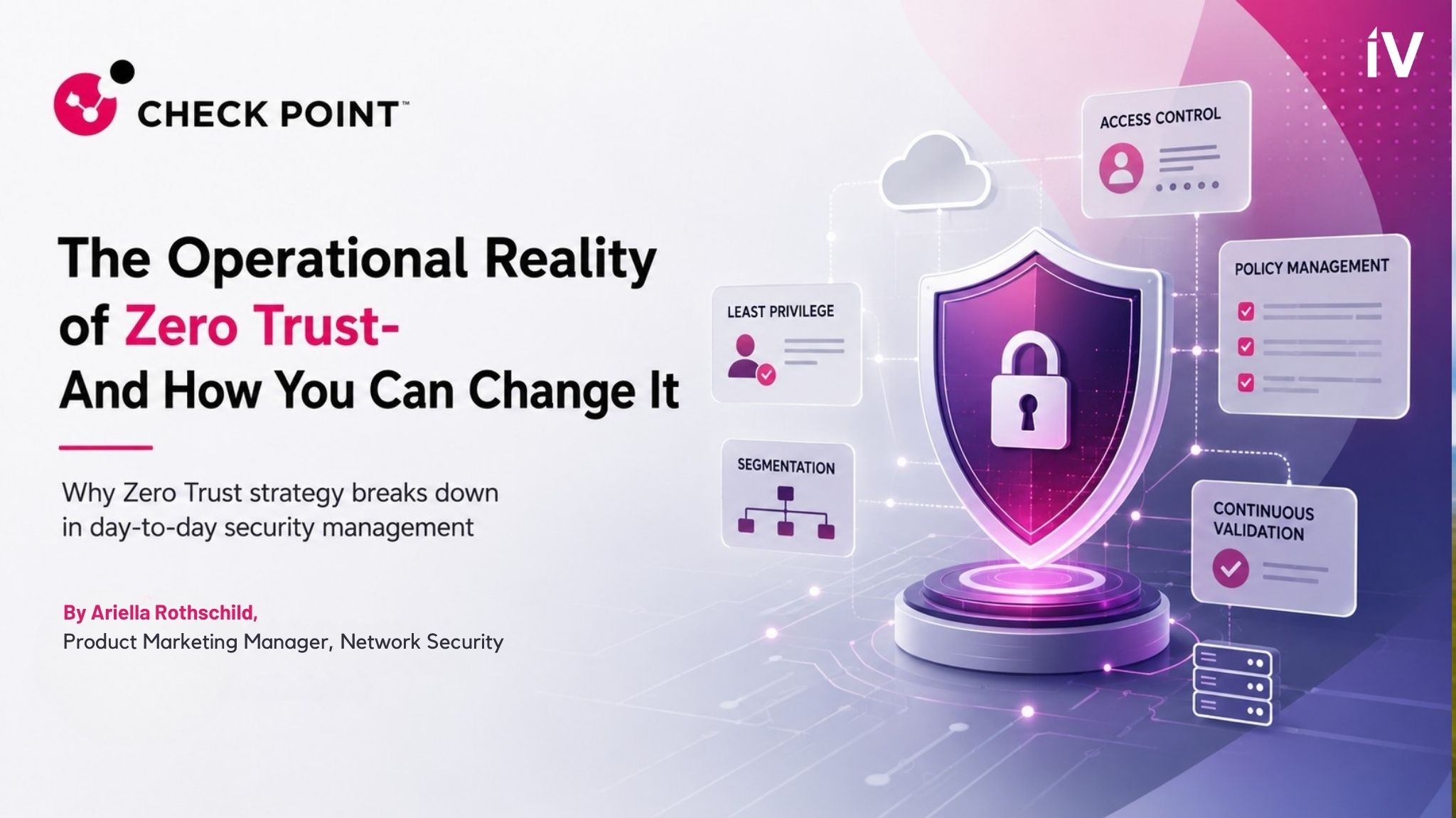
The principles are clear: enforce least privilege, segment critical resources, continuously validate access, and reduce implicit trust across the environment. But in practice, every application migration, access request, cloud deployment, user update, and temporary exception changes the policy layer faster than teams can validate it.
Over time, the gap between Zero Trust intent and security policy reality widens.
Zero Trust depends on continuous proof that policy still matches intent. In hybrid environments, that proof is becoming too complex to manage manually.
Why Zero Trust Execution Breaks Down
Zero Trust breaks down in the operational details.
Take a common example: an admin finds a rule that allows a broad source group to reach a sensitive application. The rule looks risky, but tightening it is not simple. Before making a change, the team needs to answer several questions:
- What traffic actually matched this rule?
- Which users, devices, and source objects are involved?
- Is the destination still in the data center, or has it moved to the cloud?
- Was this access approved for a specific project, business unit, or compliance requirement?
- What application or business process could break if the rule is changed?
The answers are rarely in one place. Identity context may sit in one system. Logs and event data may sit in another. Cloud objects may have changed since the rule was created. Compliance requirements may apply only to one segment, region, or business unit. A ticket may explain why access was approved, but not whether it is still needed.
This is the Zero Trust execution gap. Security teams can often see that a rule is too broad, stale, overlapping, or risky. What takes time is proving what can safely change.
Dashboards and alerts may show more activity, but they do not connect policy context to a clear remediation path. Teams still have to investigate manually, validate impact, coordinate with application owners, open tickets, document the change, and make sure the fix does not create an outage.
That is where Zero Trust stalls: not in the strategy, but in the daily work required to keep access aligned with intent.
How Policy Drift Weakens Zero Trust
Policy drift is not usually caused by one bad decision. It is the result of many typical security and business changes that have accumulated over time.
Common examples include:
- A temporary rule created for a migration remains active after the migration ends.
- A source or destination is changed to “Any” because a team needs to restore connectivity quickly.
- A service object includes more ports than the application actually uses. disabled rule stays in the rulebase because no one knows whether it is safe to delete.
- An access rule still points to legacy objects after the workload moved to the cloud.
- A broad user group keeps access because role changes were never reflected in the policy.
These are not edge cases. They are the daily residue of change management, troubleshooting, M&A, cloud migration, application updates, and audit pressure.
Policy drift is especially dangerous because the environment may appear healthy. Applications are reachable. Users can work. Tickets are closed. But the rulebase may no longer represent the original Zero Trust intent. Access becomes broader than required. Segmentation boundaries become less precise. Compliance evidence becomes harder to defend. The attack surface grows without a visible failure event.
For security teams, the challenge is not only finding stale or risky rules. It is validating what each rule still does, who depends on it, whether it matches current business need, and how to tighten it without causing disruption.
Zero Trust Needs a New Operating Model
Zero Trust cannot be sustained with periodic cleanup and manual review alone. It requires a security management model that continuously compares policy intent with what is actually happening in the environment.
That operating model needs to answer practical questions quickly:
- Which rules are overly permissive, unused, duplicated, or no longer matched by traffic?
- Which users, devices, applications, and workloads are actually using the access?
- Which policy changes could reduce exposure without breaking legitimate business activity?
- Which compliance requirements or internal guidelines are affected by the current rulebase?
- Which remediation steps can be approved and executed through defined workflows?
Introducing Agentic Zero Trust Policy Hygiene
[Check Point Policy Insights– embedded video]
This is the operating model that agentic zero trust orchestration is bringing to security management: not another dashboard, and not AI assistance that stops at answering questions. It is a move toward agentic security management, where AI-powered capabilities can reason across live context, identify what needs to change, and help move approved work forward within defined guardrails.
For Zero Trust, that is key. The platform does not just help teams look at policy in isolation. It can connect policy, logs, identity, compliance posture, infrastructure health, traffic, and threat activity to build a clearer picture of what the rule is doing, who depends on it, and where access no longer matches intent. From there, teams can move from manual analysis to policy-aware recommendations, approved remediation, and automated workflows that reduce the operational drag between finding the risk and fixing it.
The goal is not to remove human judgment. The goal is to stop forcing security teams to manually collect every signal, interpret every dependency, and coordinate every step before they can act.
This is the shift Zero Trust needs: from policy reviews that happen after risk has accumulated to an operating model that continuously checks whether access still matches intent, identifies where control is weakening, and helps teams move approved remediation forward before drift becomes exposure.
That shift is part of a larger security management breaking point. AI-era threats are moving faster, hybrid environments are changing constantly, and manual operations are carrying more complexity than they were designed to handle.
Read the eBook
Download The Security Management Breaking Point: Why manual operations can’t keep pace with AI-era threats and hybrid complexity to explore the pressures reshaping security management and why teams need a new operating model built for speed, accuracy, automation, and control.
eBook | Security Management Breaking Point | Check Point Software

