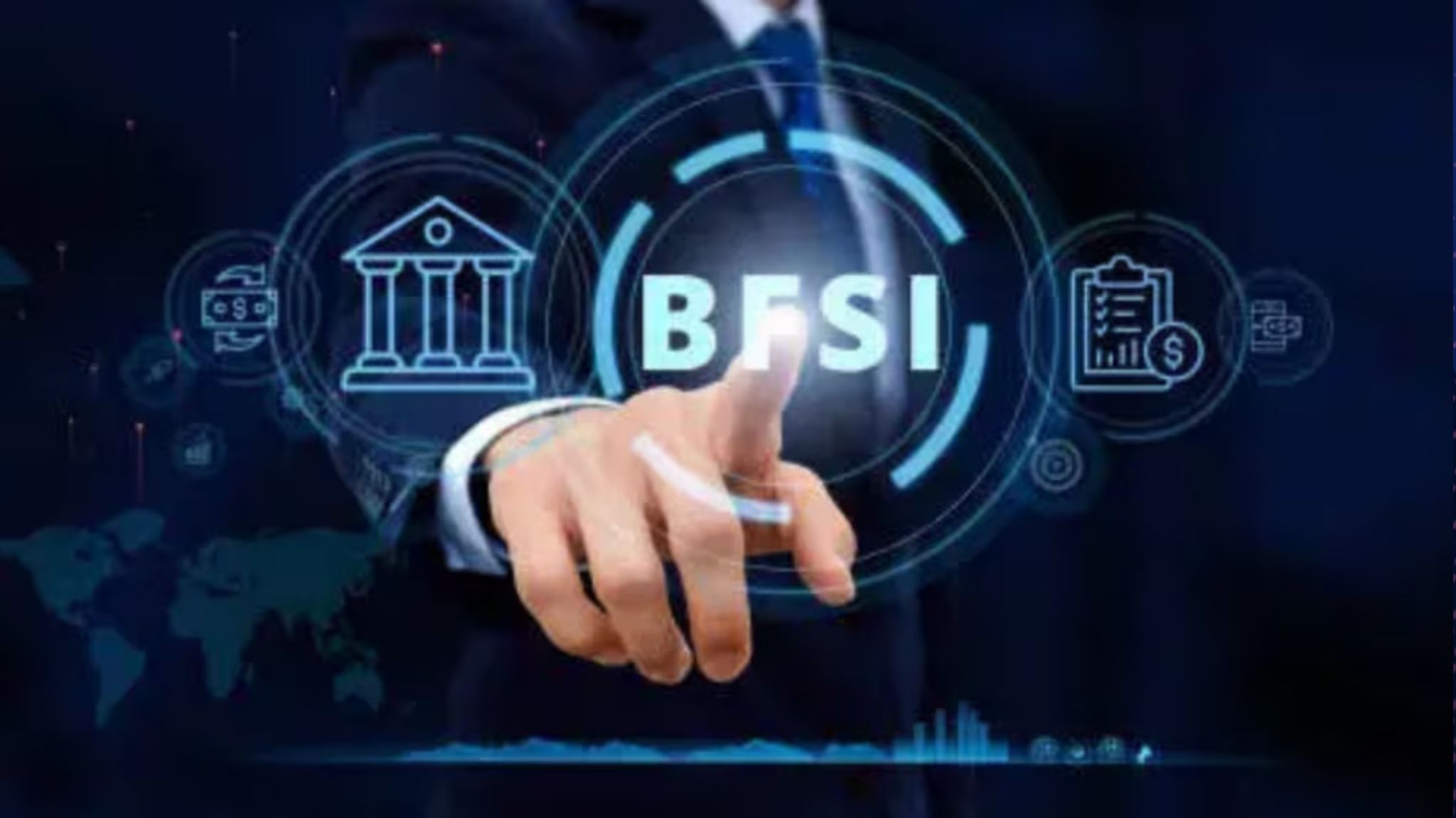
The banking and financial services industry, which encompasses fintech and insurance businesses as well, has evolved swiftly in the recent past. By embracing digital technology, the industry is now way past the branch-bound era, for now the customers rarely need to visit a branch. In fact, banking representatives such as the field agents, relationship managers and loan officers too have now adopted a remote working mechanism. In prevailing times, banking and all other financial services are mobile first, distributed and API-driven. And amid this transpiring industry shift from the old to the new, the factor of security has assumed more importance than ever, with the regulatory scrutiny increasingly tightening rather than easing.

As a consequence of the aforementioned tech-driven transformation, the BFSI industry is currently faced with three core challenges, of which the foremost is providing secure services vis-à-vis ensuring a hassle-free customer experience. For instance, it is imperative to put in place additional security measures to prevent phishing attacks on banking devices, but additional steps for availing services might at some point disrupt the customer experience. Similarly, in the wake of Shadow IT risks like data leaks, regulatory breaches and malware entry, the other major challenge is compliance vs operational agility. The third challenge, i.e. BYOD/COBO expansion vs centralized control, emanates from realities such as data leakage from unmanaged endpoints, and compliance requisites from RBI/SEBI/PCI-DSS.
It would not be unwarranted to state at this point that the need for a unified, secure and intelligent endpoint management is now more than ever, for the endpoints are usually the weakest and most targeted layer in financial services. With the endpoints now extending beyond smartphones and laptops to ATMs, kiosks and cloud-hosted workloads, there is an imperative need of a strategic shift from device management to a comprehensive endpoint governance. An effective endpoint management today entails a unified mechanism that is essentially a zero-trust enforcement layer, a compliance enabler, an operational control framework and a risk reduction mechanism. Lest we forget, modern endpoint management isn’t about locking devices, it’s about orchestrating trust across distributed financial ecosystems.
A practical use case of a robust, unified endpoint management mechanism is the secure loan origination devices used extensively by authorized field agents. The hardware and cloud-based software solutions are used by field agents to safely process and approve loan applications even in remote geographies while adhering to all norms and compliances. Other significant use cases of the same include kiosk lockdown for banking branches, secure tablet deployment for wealth advisors, corporate-owned smartphones with containerization and automated patching & OS updates across distributed branches. The specificity of these solutions, dedicated to diverse financial needs, further adds to the credibility of the service providers.
What’s also sacrosanct for the banking and financial industry is to adhere in totality to the compliance and regulatory framework. For this reason, it is as important for the industry stakeholders to fulfil their data localization requirements as it is to ensure audit readiness. It thus assumes utmost significance for the banking and financial services providers to put in place a real time monitoring mechanism. Besides, the factors of policy enforcement and encryption standards cannot be ignored, and the one-stop solution for all aforementioned requirements is a comprehensive and unified endpoint management system, for it is effectively the invisible backbone of compliance resilience.
Considering the widespread significance of it, there is little doubt over how endpoint management is powering the present as well as the future of financial services in India. In the near future, one may not rule out the possibility of advancements such as automated policy enforcement systems, predictive threat containment and integration with SIEM/SOC ecosystems. In financial services, trust is currency. And in a mobile-first world, that trust begins at the endpoint.