
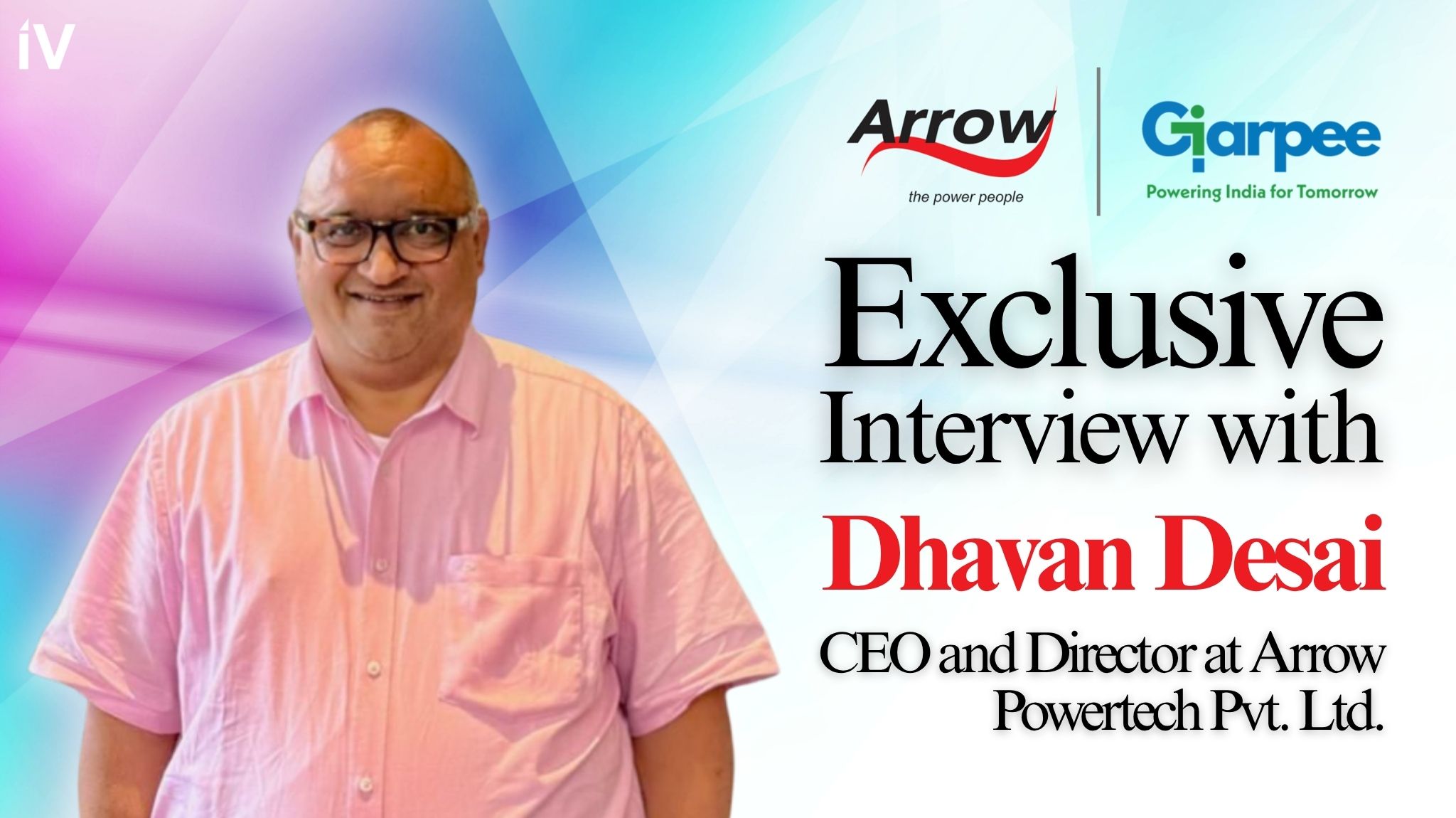
Dhavan Desai- Our dual-brand approach allows us to sharpen positioning. ‘Arrow’ addresses mainstream retail and channel-driven markets, while ‘Giarpee’ – being GeM-registered – caters to institutional and government buyers. This structure ensures we maximize reach without diluting brand identity.
IT Voice– How important is the GeM-registered GRP line in capturing government and institutional business?
Dhavan Desai- Government and Institutional procurement is increasingly routed through GeM. Giarpee’s registration gives us credibility and direct access to this segment, which is vital for scaling in public infrastructure, education, and healthcare projects.
IT Voice– What key differentiators help Arrow Powertech stand out in the competitive UPS and stabilizer market?
Dhavan Desai- We stand out through three pillars:
Product breadth: From 600 VA to industrial-grade three-phase UPS.
Quality assurance: BIS-certified manufacturing and rigorous testing.
Local advantage: Strong service network across major cities.
IT Voice– With UPS systems starting from 600 VA to three-phase solutions, how are customer requirements evolving across segments?
Dhavan Desai- Customers are moving from basic backup needs to integrated solutions. SMEs demand compact, efficient systems, while corporates and institutions seek scalable three-phase solutions with remote monitoring. Customization and reliability are now as important as price.
IT Voice– How do you see the shift from conventional lead-acid batteries to lithium-ion technologies shaping the industry?
Dhavan Desai- Lithium-ion is reshaping the industry. Faster charging, longer life, and compact design make it ideal for modern applications. As costs decline, adoption will accelerate, especially in data centers, healthcare, and smart offices. We are one of the first made-in-India brands to offer Lithium Ion batteries for Line interactive and Online UPS both and we have already started deploying UPSes with Li-on batteries at the customer place.
IT Voice– Are lithium-ion UPS systems becoming mainstream, or are they still a premium niche segment?
Dhavan Desai- Currently, lithium-ion UPS is a premium segment, but the trajectory is clear – it’s moving toward mainstream adoption. Within 3–5 years, we expect it to become the default choice in urban and institutional markets.
IT Voice– Your growth roadmap includes e-commerce, channel expansion, and GeM participation. Which of these will be the biggest growth driver?
Dhavan Desai- All three – E-Commerce, Channel Expansion, and GeM – are critical. But channel expansion will be the biggest driver, as India’s power backup demand is strongest in Tier-2 and Tier-3 cities where trusted local partners influence buying decisions.
IT Voice– How are you empowering and motivating channel partners in Tier-2 and Tier-3 markets?
Dhavan Desai- We invest in training, marketing support, and incentive programs. By equipping partners with digital tools and service assurance, we ensure they feel empowered to grow alongside us.
IT Voice– With manufacturing facilities in Vadodara and Ahmedabad, what expansion plans are on the horizon?
Dhavan Desai- Our current facilities give us scale and flexibility. Expansion will focus on automation, lithium-ion assembly lines, and capacity enhancement to meet rising demand in institutional and export markets.
IT Voice– What policy support would help MSMEs in the power electronics sector scale more aggressively?
Dhavan Desai- MSMEs need easier access to credit, faster BIS approvals, and incentives for R&D in energy storage. Streamlined compliance and support for local manufacturing would help the sector scale aggressively.
IT Voice– What is your long-term vision for Arrow Powertech in India’s evolving power and energy ecosystem?
Dhavan Desai- Our vision is to be a trusted energy solutions provider, not just a UPS manufacturer. We aim to integrate smart energy storage, hybrid solar systems, and lithium-ion technologies into India’s evolving power ecosystem – delivering reliability, sustainability, and innovation.