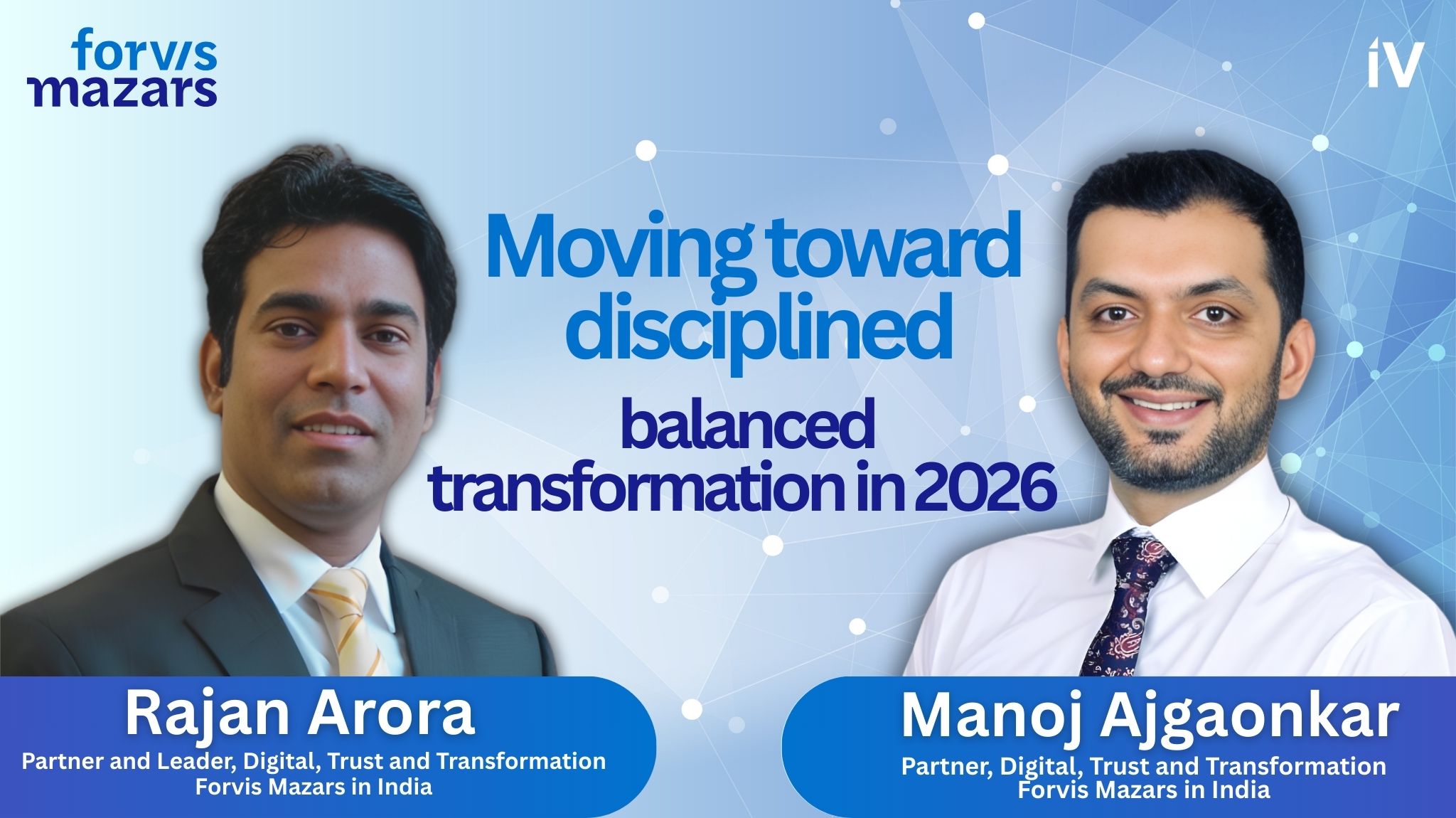
As we look toward the coming year, business leaders face a defining moment in enterprise transformation. The convergence of artificial intelligence, cloud modernization, cybersecurity imperatives, and data governance demands has created both unprecedented opportunity and considerable complexity. The past year taught us that while AI captures headlines and imagination, sustainable transformation requires equal attention to the infrastructure, security, and organizational capabilities that make innovation possible at scale.
How do we look at 2025?
Throughout 2025, organizations navigated competing priorities. Some made significant progress integrating AI into operations while modernizing core systems and strengthening security postures. Others found themselves caught between ambitious digital roadmaps and practical constraints, budget pressures, talent shortages, implementation challenges, and the very real phenomenon of change fatigue. What separated successful initiatives from stalled ones was rarely the sophistication of individual technologies, but rather the quality of holistic execution: clear governance, stakeholder alignment, and realistic understanding of what enterprise-wide transformation requires.
The foundations that will define success
For 2026, four interconnected priorities will separate resilient enterprises from those still searching for direction.
First, data infrastructure must evolve from cost centre to strategic enabler. Whether pursuing AI driven insights, advanced analytics, or operational automation, organizations cannot succeed without data that is accurate, accessible, and appropriately governed. The challenge extends beyond collection, it requires establishing quality standards, defining clear ownership, and building technical foundations that support specific business outcomes. Organizations report that inadequate data readiness remains
Outlook 2026
A primary barrier to AI deployment, but the implications reach far beyond AI into every aspect of digital operations.
Second, AI deployment must shift from experimentation to operational discipline. The rush to adopt generative AI throughout 2025 revealed both potential and pitfalls. For 2026, success will come from moving beyond pilots to scalable implementations with clear business cases, proper governance, and measurable outcomes. Domain-specific applications, whether in service operations, risk and compliance, customer service, supply chain optimization, or knowledge management, will deliver more value than generic tools. Organizations must invest in the less visible work of model governance, bias monitoring, and integration with existing workflows if they expect AI to generate sustained returns rather than impressive demos.
Third, cybersecurity must become embedded resilience, not reactive defence. The threat landscape grows more sophisticated as attackers leverage automation and AI to accelerate attacks and craft convincing social engineering campaigns. Zero Trust architectures are transitioning from aspiration to operational standard, requiring continuous verification and identity-first controls across all systems. Organizations face mounting pressure to protect not just traditional IT infrastructure but also cloud environments, AI systems, supply chain connections, and remote work arrangements. Security can no longer be treated as a separate function; it must be woven into every technology decision and business process.
Fourth, enterprise technology must balance innovation with integration. The appeal of new platforms and capabilities must be weighed against the reality of existing systems, vendor relationships, and operational dependencies. Cloud migration continues to progress, but organizations are learning that successful modernization requires thoughtful sequencing, not wholesale replacement. The goal is not to adopt every emerging technology but to build a coherent architecture where new capabilities enhance rather than complicate the existing environment. This includes making deliberate choices about which systems to modernize, which to replace, and which to maintain while focusing resources elsewhere.
Navigating the implementation gap
The most pressing challenge for 2026 will not be identifying strategic priorities but executing them effectively amid competing demands. While technology adoption accelerates, many organizations remain stuck between pilot success and enterprise-scale deployment. This gap reflects deeper issues: misaligned incentives, insufficient change management, and the tendency to treat transformation as primarily a technology challenge rather than an organizational one involving people, processes, and culture.
Leadership teams must resist pursuing every emerging trend simultaneously. Organizations achieving meaningful results select focused initiatives, allocate proper resources, and commit to seeing them through to measurable outcomes. Whether implementing AI solutions, migrating to cloud infrastructure, or strengthening cybersecurity postures, success requires the discipline to prioritize ruthlessly and execute thoroughly.
Equally critical is addressing persistent skills gaps. Demand continues growing for specialized capabilities in AI engineering, data science, cloud architecture, and security operations. Yet the most valuable employees often bridge technical and business domains, translating complex capabilities into
Outlook 2026
practical solutions addressing real operational challenges. Organizations must invest in both recruiting external talent and upskilling existing teams who understand business context and institutional knowledge that cannot be easily replicated.
Learning from 2025’s realities
The past year provided necessary recalibration. Early enthusiasm for AI gave way to grounded expectations as organizations confronted implementation complexities, data quality issues, integration challenges, governance concerns, and the organizational change required for adoption. Meanwhile, cybersecurity incidents reinforced that security cannot be an afterthought, and cloud migrations revealed that legacy modernization takes longer and costs more than initial estimates suggest.
Yet 2025 also demonstrated what becomes possible through disciplined execution. Organizations that started with clear business problems, invested in foundational capabilities before scaling, and prioritized stakeholder engagement alongside technology deployment began seeing tangible returns. They improved operational efficiency, enhanced customer experiences, reduced risk exposure, and built competitive advantages that will compound over time.
Preparing for the year ahead
Three recommendations stand out as organizations plan for 2026.
Build incrementally within coherent architecture. Start with high-value use cases where technology demonstrably improves outcomes. Prove concepts, learn from implementation, then scale systematically. Ensure each increment connects to larger strategic vision so isolated successes integrate into enterprise-wide capability rather than creating additional complexity.
Invest in governance before it becomes crisis. The regulatory environment around AI, data privacy, and cybersecurity will only grow more complex. Organizations establishing clear policies, accountability structures, and monitoring capabilities now will find compliance far less disruptive than those retrofitting governance after incidents. This applies equally to AI model oversight, cloud security controls, vendor management, and internal process discipline.
Prioritize human readiness alongside technical capability. No transformation succeeds without people who understand changes, see their value, and can apply them effectively. This requires transparent communication, accessible training, and feedback mechanisms enabling course correction. The most sophisticated AI initiatives deliver no value if the workforce views it with scepticism or cannot integrate it into daily operations.
The Year of Balanced Execution
If 2025 taught us the limits of technology-first approaches, 2026 must demonstrate what becomes possible through balanced, disciplined transformation. The question is no longer whether to adopt AI, modernize infrastructure, or enhance security, it’s how to implement these capabilities sustainably, at scale, and aligned with genuine business needs.
The path forward requires balancing innovation with integration, ambition with pragmatism, and speed with thoroughness. Organizations approaching 2026 with this mindset, pursuing transformation as ongoing capability rather than discrete projects, will position themselves not just to navigate uncertainty, but to define standards their industries follow for years to come.