

India’s BFSI sector is expanding at a pace few industries anywhere can match, new branches, new credit markets, new digital channels, new agency forces. The hiring numbers are remarkable. And yet a quiet crisis is building from within: the industry is adding people faster than it can develop, retain, or build them into the workforce it actually needs.

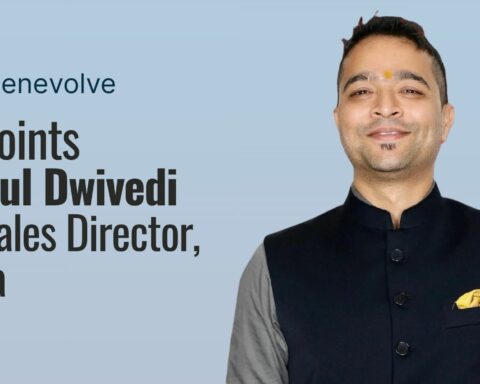
When we started Benevolve, the problem we kept hearing from BFSI leaders was not “we can’t find people.” It was “we can’t hold on to them, and we don’t understand why.” That question — why are we losing people we invested in, and what could we have done differently, is what this article is really about.
The attrition economics that no one is talking about loudly enough
Frontline attrition in private banks runs at 30–40% annually. Loan sales teams regularly exceed 100% annualised churn. A relationship manager who leaves at month eight takes the full investment of their ramp-up and delivers none of the returns. In field roles where customer trust is built over months, that loss has a direct line to revenue, not a soft metric.
Across a mid-size private bank with 5,000 frontline staff at 35% attrition, the full cost — recruitment, onboarding, trainer time, manager distraction, lost productivity runs into hundreds of crores annually. Most BFSI HR functions do not have a single dashboard that shows this number. That invisibility is itself part of the problem.
In our work with BFSI organisations, one of the first things we do is help leaders model this cost in full. The number almost always surprises them not because the inputs are hidden, but because no one has ever assembled them in one place. That is a systems problem before it is a strategy problem.
The skills BFSI most urgently needs, data analysis, AI literacy, risk modelling are fought over by fintechs, tech firms, and global banks simultaneously. India cannot hire its way out of this. The answer is to develop from within and that requires fundamentally different infrastructure.
Why India’s BFSI HR infrastructure is struggling to keep pace
India’s BFSI customer-facing technology is often world-class. The workforce infrastructure behind it is a different story ,compensation, performance, learning, and succession systems running on disconnected tools or spreadsheets, creating three problems that compound the attrition challenge.
No real-time picture of who is at risk
An employee’s performance data, learning activity, and career aspiration sit in separate systems that never speak to each other. The disengagement pattern is visible in the data ,but if no one sees it until the monthly report, the employee has already mentally left.
Regulatory complexity adds a uniquely Indian dimension
RBI, IRDAI, SEBI, and the DPDP Act create workforce compliance obligations that are not optional. Inconsistent documentation and incomplete audit trails are not just inefficiencies — they are regulatory exposure. Manual HR processes, still common across mid-tier NBFCs and distributors, cannot manage this at scale.
Decisions made too late, on data that is already stale
Monthly attrition reports and annual engagement surveys are instruments of a slower era. In an environment where a loan sales executive decides to leave within weeks of one bad manager interaction, data lag is the problem, not leadership judgement.
The Gen Z workforce is rewriting the retention contract — and BFSI is not ready
Most frontline BFSI hires in India today are in their early-to-mid twenties. Compensation and job stability are baseline expectations, not rewards. What they are evaluating, often within the first ninety days is whether this organisation can show them a visible path forward.
A 23-year-old RM wants to know: what does my growth look like in 18 months, and is there a path into credit or product? Most BFSI organisations have no clear answer — not because the opportunity doesn’t exist, but because the systems to surface it don’t. So they leave, taking six months of institutional knowledge with them. In BFSI, where product complexity and regulatory nuance take real time to internalise, that loss compounds quickly across a large frontline workforce.
What strikes me most, working with HR leaders across BFSI, is that they understand this intuitively. They know their Gen Z workforce is different. The gap is not in awareness — it is in the tools to act on it. Career pathing conversations happen informally, if at all. Internal opportunities are circulated by word of mouth. Skill assessments, where they exist, live in spreadsheets that no manager actually consults. The intent is there. The infrastructure is not.
What AI-led workforce intelligence actually changes for India’s BFSI leaders
In India’s BFSI context — high volumes, high attrition, regulatory complexity, Gen Z majority — the gap between what intelligent workforce systems make possible and what most organisations currently have is significant. This is precisely the gap Benevolve was built to close. Four areas stand out.
Attrition prediction before it becomes attrition
AI that reads performance trends, manager interactions, and engagement signals can flag flight risk months before the resignation. An intervention at week four is a conversation. After the letter, it is a retention bonus that may not work.
Internal mobility at a scale that manual processes cannot achieve
Employees routinely leave for roles their own organisation could have offered. AI-powered skills mapping makes internal candidates visible, a credit analyst in Pune building digital lending knowledge and flagging interest in a Mumbai product role should be findable when that opening appears. Without connected systems, she is invisible.
Giving Gen Z the visibility they will leave to find elsewhere
For Gen Z, a personalised career path is a retention lever, not a perk. AI career pathing makes the conversation concrete ,these skills, these roles, this timeline giving managers something specific to discuss instead of vague encouragement.
Workforce planning that matches the speed of India’s BFSI growth
Private banks are opening hundreds of branches a year. NBFCs are scaling into geographies requiring local language and market knowledge. Workforce planning at this pace — modelling skill supply across business units and time horizons cannot be done on spreadsheets and quarterly reviews. AI makes it possible.
The organisations that will lead India’s next BFSI chapter
India’s BFSI talent story is genuinely exciting — a young, ambitious workforce entering one of the most dynamic financial markets in the world. The risk is that the infrastructure to support it does not keep pace with the ambition. I started Benevolve because I believed that workforce intelligence, done properly, could change this equation: not as an HR technology product, but as a strategic capability that helps BFSI leaders make better decisions about their most important asset. Organisations that invest in that capability now, real-time visibility, predictive attrition signals, internal mobility, personalised career paths, will carry an advantage that compounds over time. Those that don’t will keep paying the attrition tax. In India’s BFSI market, that tax is becoming too large to absorb.