

In few past years, a school could claim the title of a “smart campus” simply by hanging an interactive screen on the wall. A basic projector, a touch-sensitive display, and a digital stylus felt like the absolute peak of classroom technology. Today, that setup feels incredibly outdated. Educational institutions aren’t buying tech just to swap out old blackboards anymore, now they are transforming classrooms powered by AI.
The corporate world is experiencing the exact same shift. Meeting spaces have evolved past simple PowerPoint projection rooms. They are now fast-paced, hybrid environments where teams need to sketch ideas, sync with remote colleagues, and wrap up decisions in real time.
This behavioural shift is forcing a massive quiet overhaul across India’s smart boards market. Buyers are looking for past basic hardware specs like display sizes, 4K panel resolution. Instead, the real questions are about software capability: Does it link smoothly with cloud storage? Can it run built-in AI productivity tools? Will it keep receiving secure updates down the line? India’s interactive display industry has officially entered its second phase, an era where software brains matter just as much as hardware muscle.
Moving From Basic Displays to Intelligent Environments
Comparing smart boards used to be simple math. You checked the diagonal screen size, touch points, the Android version, and basic RAM specs. While those foundations still matter, they miss the actual day-to-day bottleneck: Does this device actually make a teacher or presenter’s life easier?
In education, finding digital learning content is no longer the issue. Educators are flooded with videos, online PDFs, and web modules. The real headache is juggling all of it during a live class without constantly minimizing windows, losing tabs, or breaking the classroom’s focus.
Corporate environments face the exact same friction. A standard team alignment requires running a video call, tracking a shared document, and trying to capture whiteboard notes simultaneously across multiple laptops. When the underlying hardware acts as a roadblock instead of a bridge, momentum breaks.
The Real-World Practicality of AI Tools
Artificial intelligence gets a lot of hype, but its best features are often the most subtle and practical.
Take a teacher mapping out a complex biology lesson for the next morning. The traditional workflow involves hunting down diagram files, pasting text onto slides, and loading external websites. Built-in AI changes this by instantly pulling relevant concepts, sorting layouts, and generating interactive visuals right from the board.
In a boardroom, it means moving past static slide presentations. Teams want active workspaces that categorize ideas during a brainstorm, transcribe action items, and keep remote participants perfectly in loop. AI isn’t stepping in to replace the teacher or the manager—it’s just handling the repetitive digital cleanup that wastes valuable time.
The Shift Beyond Hardware Replication
In the tech manufacturing world, hardware specs are becoming incredibly easy to copy. Thin bezels, fast processors, and brilliant displays eventually become standard across every price point. Software, however, requires deep engineering and is much harder to replicate.
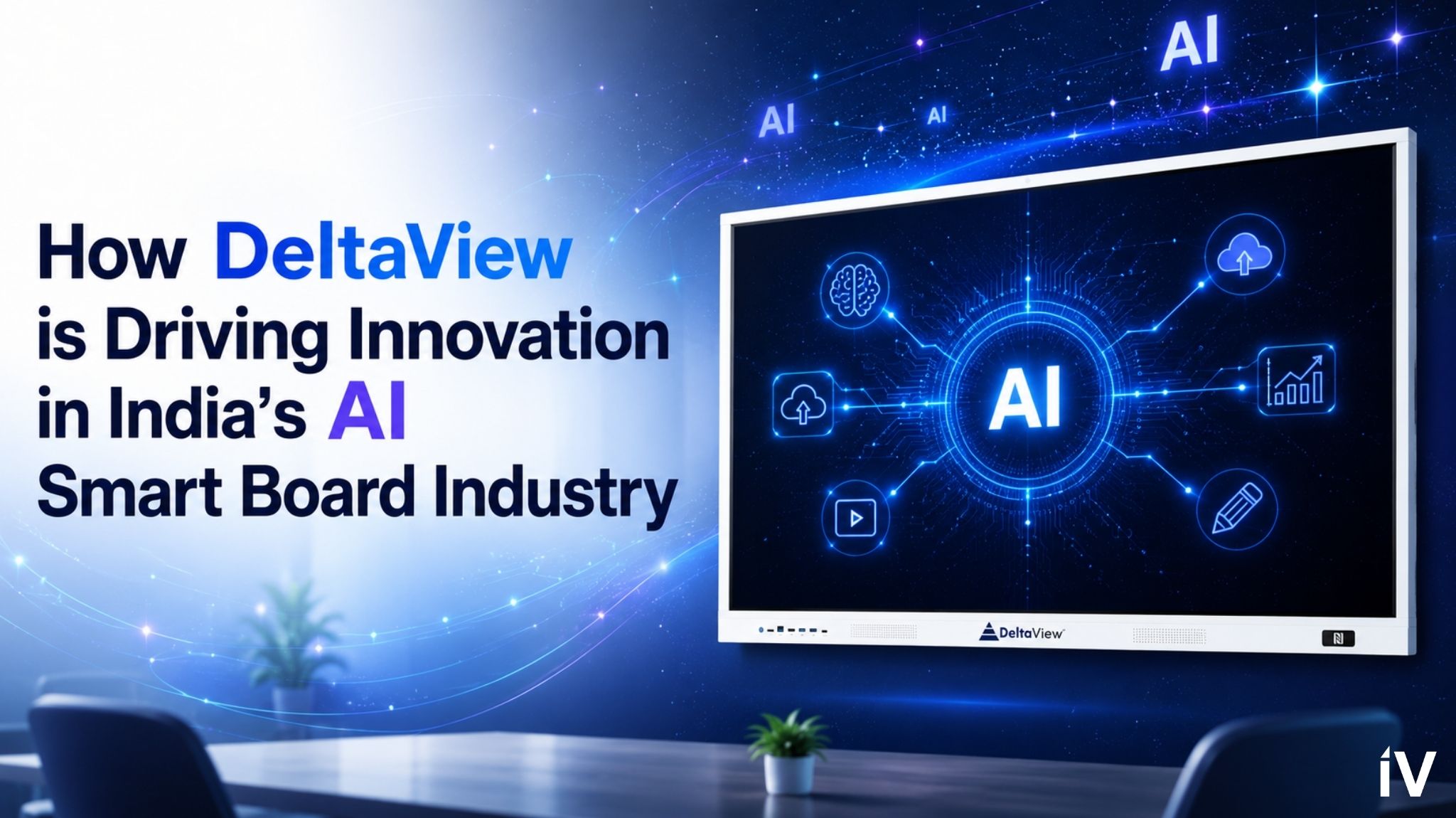
Recognizing this, progressive tech companies are pivoting their focus. DeltaView has built out a complete internal ecosystem, weaving interactive hardware together with smart AI whiteboarding, seamless wireless casting, multi touch points, wirelessly data sharing, and cloud workflows. Software is treated as the core engine rather than a decorative add-on.
Their dedicated platform, DeltaView Canvas AI, highlights this approach. Instead of treating the display like a flat digital notebook, it serves as an open visual landscape where professionals and educators can map out ideas, annotate live files, and run highly interactive sessions out of a single app window.
Meeting India’s Rapid Digital Shift
The scale of India’s ongoing digital upgrade is massive. K-12 schools are upgrading infrastructure to improve classroom retention, universities are pivoting toward interactive seminars, and businesses are rebuilding offices around permanently hybrid workflows. These changing environments demand tech that is highly reliable, incredibly intuitive, and enterprise-secure.
The Rise of Secure, Certified Software Ecosystems
Because these smart boards are now deeply connected across schools and corporate networks, buyers are prioritizing software security over everything else. A few years ago, a board just needed to play videos and support basic touch writing. Today, users demand access to official workspace apps, seamless cloud access, and guaranteed over-the-air updates.
This explains why certified frameworks like Google EDLA (Enterprise Devices Licensing Agreement) are becoming standard requirements. An EDLA-certified panel gives users native, secure access to the full Google workspace application library, paired with strict enterprise-grade security patches that protect school and office networks. For anyone planning a long-term technology investment, software integrity has become a non-negotiable metric.
Why Speed and NPU Power Dictate Everyday Usability
Running real-time AI tools introduces a hardware challenge that buyers often overlook: processing power. Standard handwriting recognition, automatic shape smoothing, live voice translation, and smart document parsing require massive computing power.
To prevent lag, modern AI smart boards are separating tasks. Manufacturers are adding dedicated Neural Processing Units (NPUs) to handle heavy AI computations without draining the main processor. For the end user, this architecture shows up in the everyday details: handwriting tools feel as fast as real ink on paper, application switching stays instant, and intensive presentations run flawlessly without freezing the system.
Engineering Products for the End User
The Indian market has grown incredibly selective. Long lists of arbitrary hardware specs no longer close deals. Modern buyers—whether they are school principals, corporate IT managers, or financial directors—look at technology through the lens of longevity and daily user adoption.
A school board has to be simple enough for every teacher to use instantly without formal IT training. A corporate display must plug right into a company’s existing workflow without requiring completely new software setups. Redefining the modern smart board means stripping away unnecessary tech fluff and focusing heavily on reliable, everyday utility.
The Road Ahead for India’s Display Market
As digital infrastructure becomes a baseline requirement across India, interactive displays will anchor the modern classroom and meeting room. However, long-term success belongs to systems that behave as complete, intelligent hubs linking AI, cloud ecosystems, and seamless communication.
Brands that treat this strictly as a hardware game will struggle to stay relevant. The future belongs to those investing heavily in user experience, software stability, and practical AI applications. Innovation isn’t about adding the most buttons—it’s about making complex technology feel completely effortless for the person standing in front of it.