

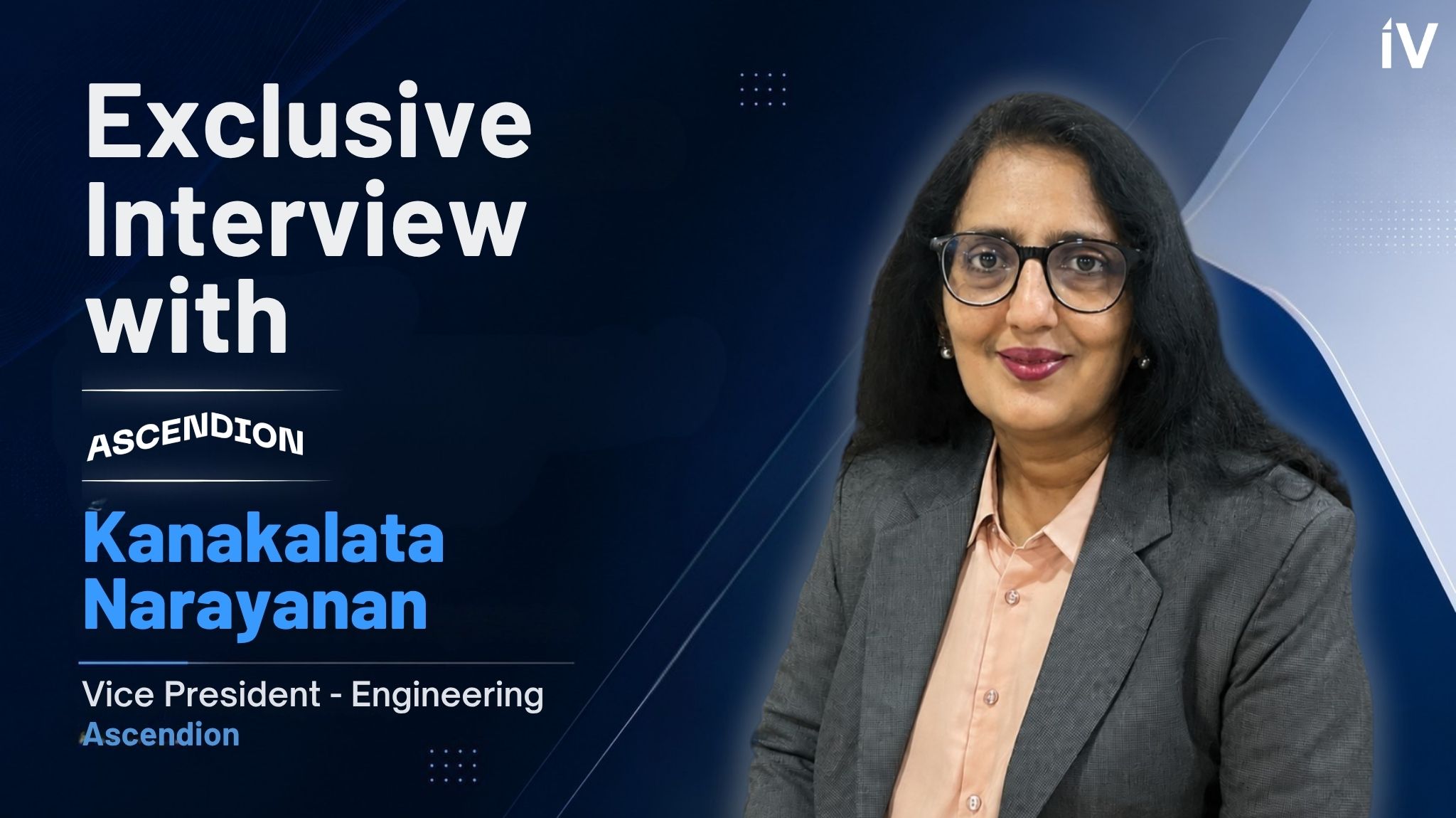
In this exclusive interview with IT Voice, Kanakalata Narayanan, Vice President – Engineering, Ascendion, shares how AI is transforming enterprise engineering, legacy modernization, and delivery governance. She discusses the importance of responsible AI adoption, strong data foundations, human oversight, and outcome-driven execution as organizations scale AI across business-critical operations.
IT Voice- As enterprises move from standalone AI pilots to embedding AI into engineering and operational workflows, how do you see enterprise delivery models, governance, and execution evolving over the next three to five years?
Kanakalata Narayanan- AI is moving from pilots into the core of enterprise execution. Over the next three to five years, companies will embed AI directly into engineering, operations, modernization, and decision-making. That will shift delivery from measuring effort to measuring outcomes.Teams will become more AI-enabled and business-aligned. Agents will support analysis, development, testing, documentation, service operations, and knowledge work, while people focus on judgment, context, and value.
Governance will also move closer to execution. It will need to be built into the workflow, with clear guardrails for data, security, model behavior, compliance, accountability, and human oversight.The real measure of AI success will not be how many use cases are launched. It will be whether AI improves speed, quality, efficiency, and business impact. The enterprises that win will be the ones that scale AI with confidence, control, and purpose.
IT Voice- AI-assisted engineering is beginning to change ownership models, review structures, and the way technical teams operate. What shifts are enterprises making around engineering accountability and delivery governance in AI-enabled environments?
Kanakalata Narayanan- The biggest shift is that accountability is moving from task ownership to outcome ownership.AI can now generate code, tests, documentation, and recommendations, but humans still own the intent, architecture, risk, quality, and business result. That distinction is becoming particularly important.
Enterprises are also rethinking how engineering teams are structured. Instead of managing only by activity, capacity, or lines of work, they are organizing more around value streams and AI-enabled pods. These teams bring product, engineering, data, security, and operations closer together around a shared outcome.
Review models are changing as well. Engineers will spend less time reviewing every output manually and more time validating architecture, business logic, security, compliance, reliability, and system behavior.
The core shift is simple. AI can accelerate execution, but accountability cannot be delegated to AI. The enterprises that get this right will define clear human ownership, strong delivery guardrails, and faster ways of turning engineering work into business value.
IT Voice- Legacy modernization remains a persistent challenge for large enterprises, particularly across aging infrastructure and decades-old codebases. Where can AI materially accelerate modernization efforts, and where does human oversight remain critical?
Kanakalata Narayanan- Legacy modernization is one of the areas where AI can make a real difference.
Many large enterprises are still running critical systems-built years, sometimes decades, ago. The challenge is not just the old technology. It is that the people who originally built those systems may no longer be around, and the knowledge is often buried inside the code.
This is where AI can help. It can analyze legacy code, explain business logic, map dependencies, create documentation, and highlight areas that are ready for modernization. In systems like COBOL, where knowledge has faded over time, AI can help teams rebuild understanding much faster.
But AI should not make the big decisions on its own. Choices around architecture, risk, compliance, business priorities, sequencing, and change impact still need experienced human judgment.
So, the best approach is to let AI reduce the complexity and speed up discovery, while people decide what should change, what should stay, and how to modernize safely.
IT Voice- In highly regulated sectors such as financial services, healthcare, and telecom, enterprises are adopting AI at very different speeds and levels of maturity. From your perspective, what sector-specific challenges are shaping AI adoption today, and how are organizations balancing innovation with compliance, risk management, and customer trust?
Kanakalata Narayanan- Regulated industries are very interested in AI, but they cannot adopt it the same way as less regulated sectors. The opportunity is huge, but so is the responsibility.
In financial services, the biggest challenges are explainability, auditability, fraud risk, and regulatory compliance. If AI supports a decision, the organization must be able to explain how that decision was made and who is accountable for it.
In healthcare, the stakes are different. Privacy, clinical accuracy, patient safety, and ethical use of data are central. AI can improve efficiency and decision support, but it must be deployed with strong human oversight.
In telecom, the challenge is scale. Providers manage complex networks, massive data volumes, service reliability, and customer experience. AI can help optimize operations, but data governance and resilience become critical.
Across all three sectors, the balance comes down to responsible innovation. Organizations are putting stronger controls around data access, model monitoring, bias, security, compliance, and human review.
The leaders are realizing that trust does not slow AI down. Trust is what allows AI to scale.
IT Voice- As AI systems become more interconnected, where do organizations still face the biggest gaps in building strong AI-ready data and governance foundations?
Kanakalata Narayanan- The biggest gap is not whether organizations can access AI. It is whether their data and governance foundations are strong enough to trust AI at scale.
Many enterprises still have fragmented data, unclear ownership, inconsistent quality, and limited visibility into where data comes from or how it moves across systems. When AI is connected to that kind of environment, the risk is not just poor output — it is poor decisions at scale.
Governance is another challenge. A lot of existing controls were built for traditional systems, not for AI that can influence decisions, workflows, and customer experiences in real time. Organizations need clearer guardrails around data access, model behavior, monitoring, accountability, and human oversight.
The shift is really from building AI use cases to building AI-ready enterprises. That means cleaner data, stronger ownership, better visibility, and governance that is part of daily execution rather than a separate checkpoint.
The companies that get this right will be able to scale AI with more confidence because they will have the trust, control, and transparency needed to make it work in the real world.
IT Voice- As autonomous systems become more deeply embedded into enterprise operations, where do you believe human judgment and oversight will continue to play the most important role?
Kanakalata Narayanan- Human judgment will matter most where decisions carry business, ethical, regulatory, or customer impact.
AI can automate tasks, analyze patterns, and recommend actions, but people still need to define the intent, understand the context, and decide what is acceptable. That becomes especially important in areas like risk, compliance, architecture, customer experience, security, and business strategy.
As autonomous systems become more capable, the human role will shift from doing every task to setting direction, validating outcomes, managing exceptions, and staying accountable for decisions.
The future is not humans versus AI. It is AI handling more of the execution, while people provide the judgment, values, and oversight needed to make sure it works responsibly in the real world.