


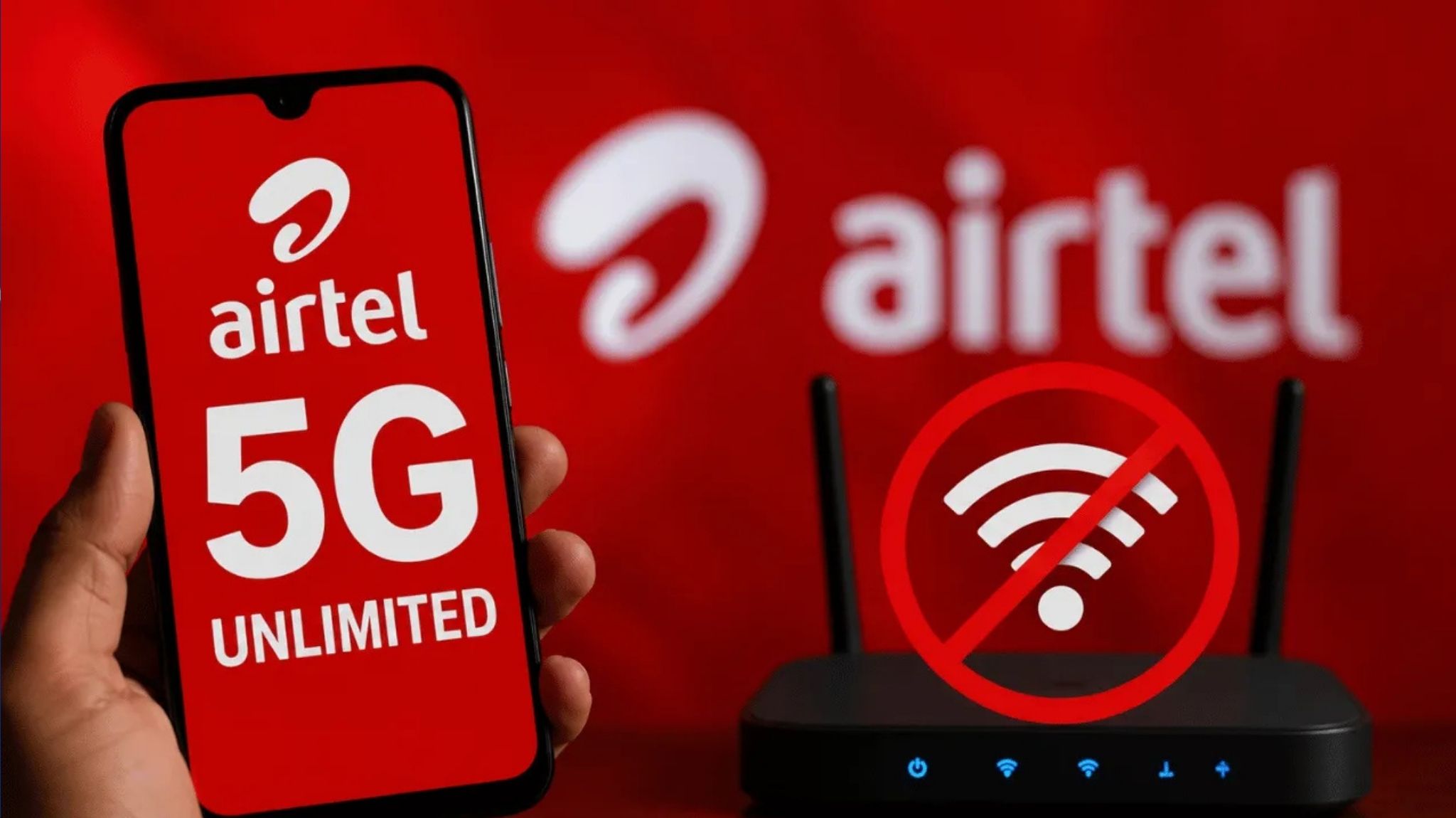
Bharti Airtel has officially updated the fine print on its website to state that its promotional “Unlimited 5G Data” benefit cannot be broadcast through mobile hotspots. The explicit clause clarifies a long-standing point of confusion for consumers, legally establishing the data perk as a smartphone-only service.
Policy Enforcement and Data Consumption Impact
The formal inclusion in Airtel’s terms and conditions clarifies how tethered data is handled. When a subscriber enables their phone’s mobile hotspot to link external hardware—such as laptops, media streaming sticks, or tablets—the secondary traffic is blocked from utilizing the unlimited 5G data bucket. Instead, any data consumed by the connected devices is directly deducted from the user’s primary daily 4G data allowance (e.g., 1.5GB or 2GB per day).
This update follows widespread consumer complaints across social platforms, where users reported that their standard plan data was depleting rapidly despite being within a designated 5G coverage area. The telecom operator emphasized that the promotional 5G access is structured exclusively for “personal and non-commercial use” directly on the native device hosting the active SIM card.
Commercial Safeguards and Fair Usage Limits
Beyond tethering restrictions, the fine print reiterates a commercial fair usage policy (FUP) cap that has governed the unlimited tier since its inception. While marketed as unrestricted access, Airtel enforces a 300GB monthly data ceiling within any 30-day billing cycle. The company retains the legal right to suspend, throttle, or alter network access for accounts suspected of fraudulent behavior or utilizing standard mobile subscriptions as a permanent alternative to home broadband.
This strict enforcement highlights a clear operational divergence between India’s top telecom providers. Currently, Airtel’s chief competitor, Reliance Jio, continues to allow unlimited 5G data sharing through mobile hotspots without similar structural deductions, making it a preferred choice for individuals who rely heavily on on-the-go pocket tethering. It remains to be seen if Airtel’s ongoing transition toward a standalone (SA) and non-standalone (NSA) dual-mode 5G network model will eventually ease or further tighten these local consumer hardware limitations.