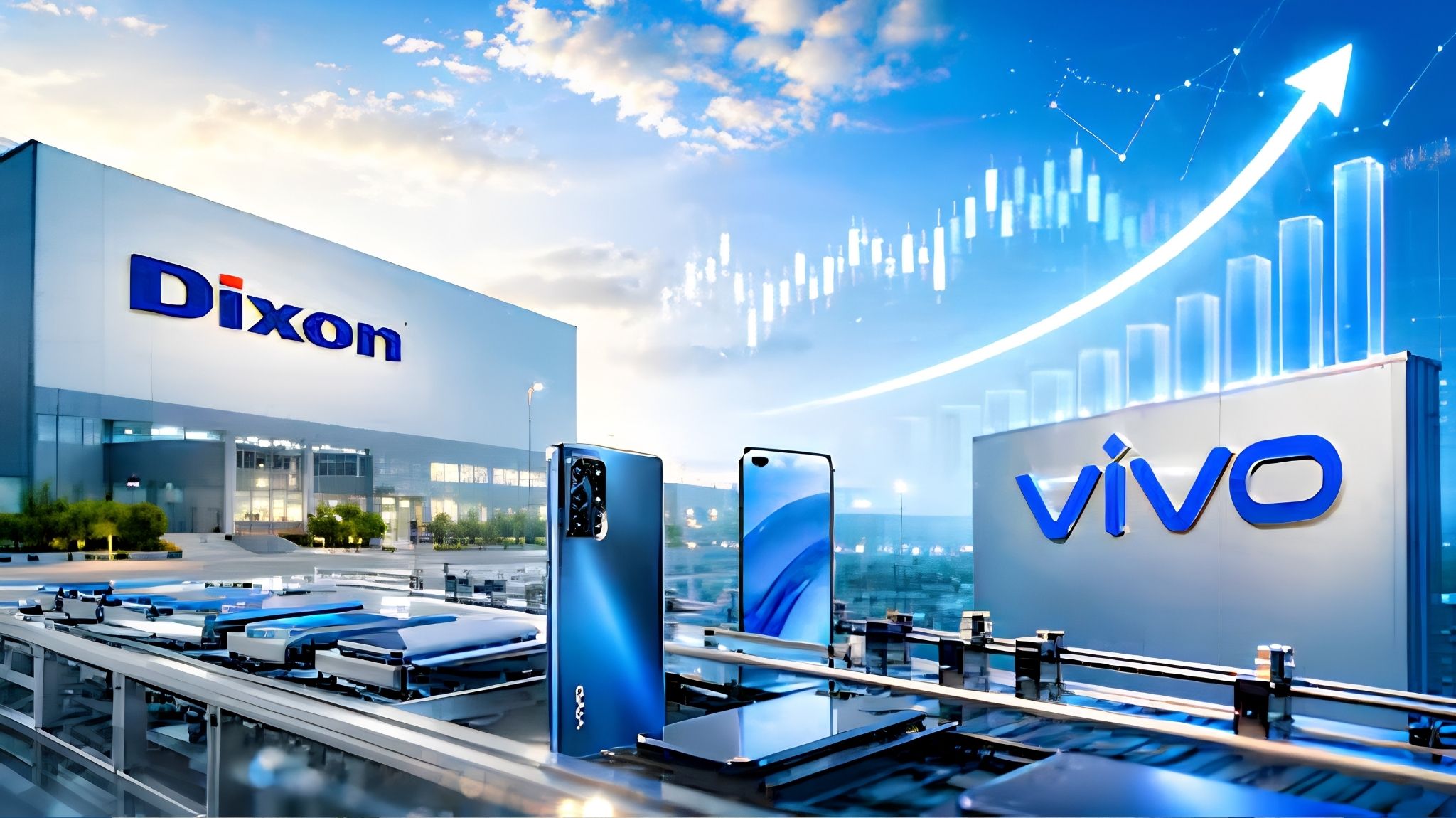
In a significant regulatory breakthrough, the Indian government has formally approved a joint venture between homegrown electronics giant Dixon Technologies and Chinese smartphone manufacturer Vivo Mobile. Granted by the Department for Promotion of Industry and Internal Trade (DPIIT), the clearance resolves a proposal that had been pending under the stringent guidelines of Press Note 3 of 2020.
Following the sign-off, both companies executed a final joint venture and shareholders’ agreement to officially establish the co-owned manufacturing entity.
Indian-Controlled Corporate Structure
Under the terms of the deal, the newly formed venture will operate as a subsidiary of Dixon, which will hold a 51% majority controlling stake. Vivo Mobile India will retain the remaining 49% share. Neither corporate entity will hold an equity stake in the other outside this joint venture.
The transaction is highly significant because it navigates Press Note 3 rules, which mandate prior government scrutiny for any incoming investments from nations sharing a land border with India. This policy, implemented in 2020 amid heightened security concerns, has historically restricted direct financial expansion from Chinese firms. The approval highlights a strategic shifting of gears by New Delhi, favoring arrangements where local corporations retain ultimate management and majority ownership.
Multibrand Production and Contract Expansion
The joint venture will initially be incorporated with a capital investment of ₹5 crore, split proportionately in line with the ownership ratio. Once fully integrated, the entity will absorb select localized manufacturing infrastructure through an asset purchase agreement.
While the new company is tasked with executing a major portion of Vivo’s primary smartphone orders within the Indian domestic market, it will operate as an independent Original Equipment Manufacturer (OEM). This allows the subsidiary to take on contract electronic and smartphone assembly for alternative third-party tech brands, driving higher asset utilization for Dixon’s contract manufacturing ecosystem.
Massive Financial and Economic Forecasts
The partnership is poised to act as a massive tailwind for India’s domestic electronics manufacturing push. Dixon projects that once the operational lines scale up to peak utilization over the next year, the joint venture could inject an additional 20 to 22 million smartphones into its total annual output. Financially, this volume shift is anticipated to generate roughly ₹30,000 crore in additional annual revenue.
Commercial assembly lines under the new venture are slated to go live during the December quarter of the current fiscal year. The companies have set a benchmark production target of roughly 11 million smartphone units for the remainder of FY27, before aggressively ramping up capacity into FY28.