
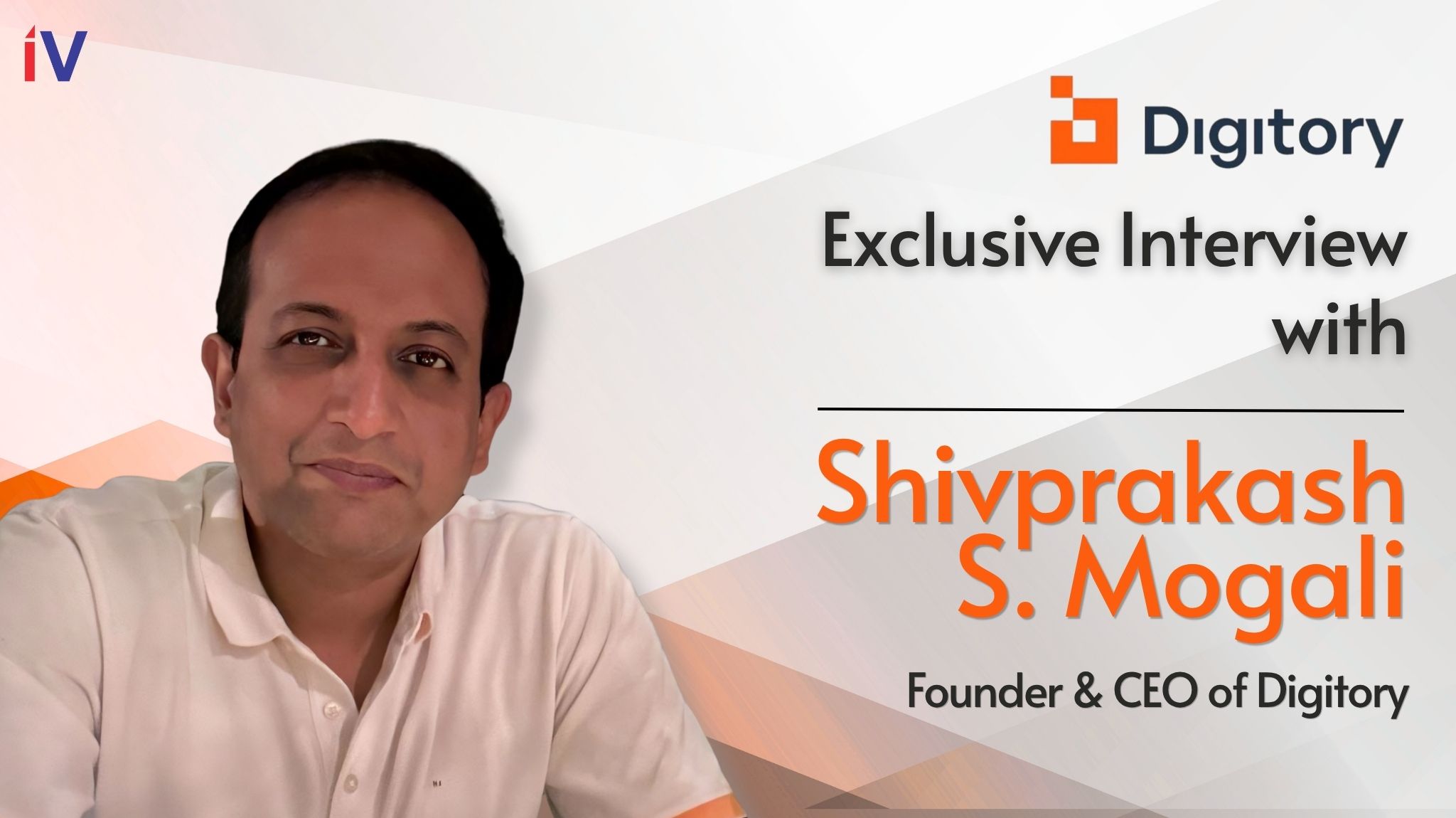
In this exclusive interview with Mr. Shivprakash S. Mogali, Founder & CEO of Digitory, shares the inspiration behind building an AI-powered Restaurant Operating System and how the company is transforming hospitality operations through intelligent automation, real-time analytics, and connected digital ecosystems. He discusses the evolution of Digitory and its event-tech platform Obvvy, the shift toward app-less, frictionless guest experiences, the role of AI and predictive analytics in improving restaurant profitability, and his vision for building the future of hospitality technology across restaurants, pubs, breweries, and large-scale events.
IT Voice- What inspired you to build Digitory, and what problem were you looking to solve for the hospitality industry?
Shivprakash S. Mogali- Before we built Digitory, we spent a lot of time on restaurant floors. Talking to customers, watching the kitchen during a rush, sitting with purchase managers while they tried to make sense of their stock. One thing was obvious everywhere we went: the front of the restaurant and the back of the restaurant didn’t talk to each other. The POS systems most places were using made this worse. Orders would take too long to reach the kitchen. Sometimes they just went missing. Systems would crash right when a place was slammed, on a Friday night or a weekend rush, exactly when you can’t afford it. These systems were built for a smaller, simpler restaurant business, not for the crowds and speed restaurants deal with today. So a place could be doing great business and still losing money in the kitchen, and nobody would know until the numbers came in at month end. That’s the gap we wanted to close with Digitory. Connect the POS, kitchen and procurement so restaurant owners can actually see what’s happening, not read about it weeks later.
IT Voice- How has Digitory evolved from a restaurant-tech platform to enabling large-scale event operations through Obvvy?
Shivprakash S. Mogali- Working on Digitory taught us that most problems in restaurants come down to systems not talking to each other. When we started looking at events, clubs, parties, dance floors, we saw the same thing happening. Ticketing, entry, ordering, payment, all handled by different tools stitched together, and that’s usually what causes the chaos on event night. That’s why we built Obvvy. It’s a separate application for event management and cashless payments, built so entry, ordering, redemption and settlement all run on one system instead of five. It connects with Digitory’s backend if a venue already runs Digitory, but it also works on its own with other POS systems. So any club or event space can use it, whatever they’re already running.
IT Voice- Why do most cashless event solutions still fail to eliminate long queues and payment bottlenecks?
Shivprakash S. Mogali- Most of the well-known cashless platforms out there use RFID or NFC wristbands. You tap the wristband instead of paying with cash, which is quicker than counting change. But that only speeds up the payment. The guest still has to walk up to the counter, stand in line, and place the order before there’s anything to tap for. There’s also a lot of hardware behind these systems, wristbands, top-up counters, readers, and all of that has to be shipped in, set up and reconciled for every single event. The queue was never really a payment problem. It’s an ordering problem, too many people trying to reach one counter at the same time. Obvvy skips the wristbands and hardware altogether. Guests can place an order from wherever they’re standing, nothing to wear, nothing to carry.
IT Voice- How is Obvvy’s WhatsApp-first approach redefining the event experience for both organizers and attendees?
Shivprakash S. Mogali- When a guest enters, they get a QR code and a link on WhatsApp, nothing to search for or download beforehand. That link gives two options, view your ticket, or place an order. Tapping “place order” opens the Obvvy app itself, where the guest can browse and order from wherever they are, instead of pushing through a crowd to reach the bar. Once they place the order, a new QR code shows up on their phone. They show it to the counter staff, who scan it and hand over the item. No double punching, no arguing over who already collected their order. For organizers, that means faster service without adding wristbands or extra equipment. For guests, it means more time at the event and less time standing in a line.
IT Voice- How does Digitory’s integrated POS ecosystem help businesses improve operational efficiency and profitability?
Shivprakash S. Mogali- Most restaurants run their POS, inventory and procurement as three separate tools that don’t talk to each other. Someone ends up typing sales numbers into a spreadsheet just to work out food cost, usually days after the fact. Digitory connects all three, so the moment something sells, it shows up in inventory and cost right away. That connection is really what makes the difference, not any one feature by itself. When the POS, kitchen and purchase manager are all looking at the same live numbers, restaurants catch cost problems before they turn into a bad month, and they can act on what customers are ordering while it’s still useful information, not three weeks later in a report nobody reads.
IT Voice- How does dynamic QR technology solve last-mile order fulfilment challenges at crowded events?
Shivprakash S. Mogali- At a crowded event, the hard part isn’t taking the order, it’s making sure the right person gets it without someone punching it in twice. Once a guest places an order on the Obvvy app, a QR code shows up on their phone, tied to that exact order. Counter staff scan it, confirm it, hand it over. No checking a printed list, no “did you already get this” back and forth. We also built in some flexibility here because every venue runs its counter differently. Some places want to scan the QR first, then have someone else key in the order and settle it. Others want to take the order first, then confirm by scanning. Obvvy works either way, so venues don’t have to retrain their staff around one fixed process.
IT Voice- What role do real-time data and analytics play in helping hospitality businesses make smarter decisions?
Shivprakash S. Mogali- Data only helps if it’s current and futuristic. A restaurant owner looking at last month’s report can’t fix today’s problem, that loss already happened. Real-time data changes that and with AI we can predict the sales, costing and anomalies for not just today but for the next week, next month. This gives the real edge! That’s really the shift we’re pushing for, moving hospitality businesses from reacting to old numbers to making decisions while there’s still time to act on them.
IT Voice- What is your vision for the future of app-less, frictionless experiences across hospitality and events?
Shivprakash S. Mogali- A lot of solutions in this space still ask people to set up something new for a single night, download an app, put on a wristband, learn a new system just this once. We think that’s going away. Whether it’s a table at a restaurant or a one-night event, people want to order and get on with enjoying themselves, not manage another download. The businesses that do well will be the ones that meet guests where they already are, on something like WhatsApp, while the actual operations, kitchen, bar, numbers, run quietly underneath. That’s the direction we’re building both Digitory and Obvvy toward, less friction on the surface, more connected data underneath.