
India is at a defining moment in its digital evolution. From world-leading public digital infrastructure to AI-powered enterprise transformations, we are innovating at remarkable speed. India processes more than 100 billion digital payments annually through its United Payments Interface (UPI) alone, and its digital economy is projected to contribute nearly 20% of GDP by 2026.
But with every milestone in digital growth comes a parallel expansion of risk. The faster we digitize, the larger our attack surface becomes.
Cybersecurity is no longer an IT issue. It is a boardroom mandate and a business continuity priority. It underpins economic resilience, customer trust, and national competitiveness.
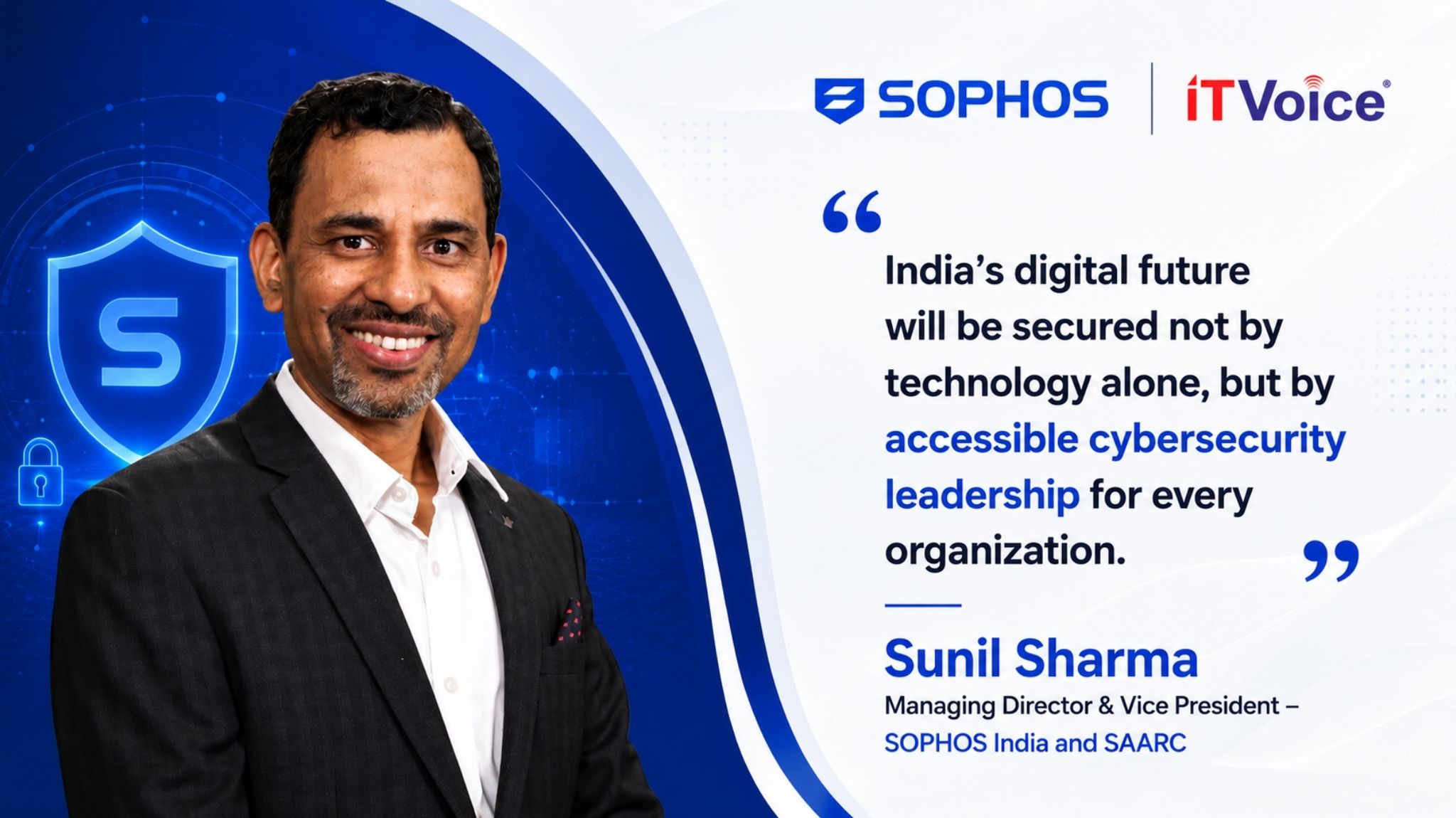
Yet the real challenge facing India is not a shortage of cybersecurity tools. It is a shortage of cybersecurity leadership.
There are more than 359 million organizations, however fewer than 32,000 have a dedicated CISO. In India, this leadership gap is even more pronounced. It is estimated that India faces a cybersecurity workforce gap of more than 800,000 professionals, leaving many organizations without the strategic oversight required to manage modern threats. While attacks have industrialized, cybersecurity leadership has not scaled at the same pace.
At Sophos, we believe the next decade of cybersecurity will be defined by the democratization of expertise.
From complexity to clarity
Indian enterprises are navigating hybrid cloud environments, AI-enabled operations, expanding digital supply chains, and evolving regulatory frameworks such as the Digital Personal Data Protection (DPDP) Act. Meanwhile, cyber incidents continue to rise.
According to government disclosures, India handles hundreds of thousands of reported cybersecurity incidents each year, reflecting both growing threat activity and increasing reporting maturity.
The nature of threats has not fundamentally changed. What has changed is their speed, efficiency, and accessibility.
In this environment, point solutions only add complexity. Organizations need unified visibility across endpoints, networks, identities, email, and cloud. They need integrated platforms that correlate signals, reduce noise, and enable decisive action.
At Sophos, our AI-native platform approach brings prevention, detection, and response together in a single adaptive architecture. But technology alone is not enough. What truly closes the leadership gap is the combination of AI and human expertise.
Empowering cybersecurity with human-guided AI
Artificial intelligence is often portrayed as a replacement for people. We see it differently. AI is a force multiplier that scales human judgment to machine speed.
Sophos’ AI systems analyze millions of signals per second, compressing detection and response times from days to minutes. For organizations that do not have large in-house security teams, this capability levels the playing field. It brings enterprise-grade protection within reach of businesses of every size.
But AI is also a dual-use technology. The same tools that help defenders automate detection can help attackers craft convincing phishing campaigns, exploit vulnerabilities, or accelerate malware development. The differentiator is governance.
If we apply the right principles, AI will not simply redefine threats; it will redefine our ability to defend against them.
Cyber resilience as competitive advantage
In today’s regulatory and economic landscape, resilience is becoming a strategic advantage. Compliance mandates, supply chain dependencies, and cyber insurance requirements are raising expectations across industries.
True resilience is built on zero trust architectures, identity hygiene, attack surface management, and 24/7 detection and response. It requires shifting from reactive security to continuous risk reduction.
Through Sophos’ managed detection and response (MDR) services, delivered in partnership with our ecosystem of managed service providers across India, Sophos provides round-the-clock protection without requiring organizations to build their own full-scale security operations centers (SOCs). This hybrid model that combines automation with expert analysts ensures that when threats emerge, response is immediate and informed.
Partnership at scale
India’s cybersecurity future will be built through collaboration. As a channel-first organization, Sophos works closely with partners across metro cities and emerging markets, ensuring advanced cybersecurity capabilities are accessible regardless of location.
This local partnership model ensures that innovation reaches the organizations that form the backbone of India’s economy – from emerging enterprises to established industry leaders. It bridges global intelligence with local accountability, creating security that is both scalable and grounded in regional realities.
Beyond the private sector, resilience also depends on strong public-private collaboration. Intelligence sharing, coordinated disruption of cybercriminal networks, and responsible disclosure practices strengthen the broader ecosystem. Cyber defense is most effective when industry innovation and government authority work in alignment.
Leading the next chapter
The cybersecurity industry is entering a platform era. Organizations are consolidating vendors, seeking integration over fragmentation, and prioritizing measurable outcomes over tool sprawl.
Sophos stands at this intersection combining nearly four decades of global innovation with an AI-native open platform, human-led services, and a partner-first growth model.
But our mission in India extends beyond technology. We are committed to ensuring that cybersecurity leadership is not a privilege reserved for the largest enterprises. It must be accessible to every organization contributing to India’s digital transformation.
The threats will evolve.
So will we.