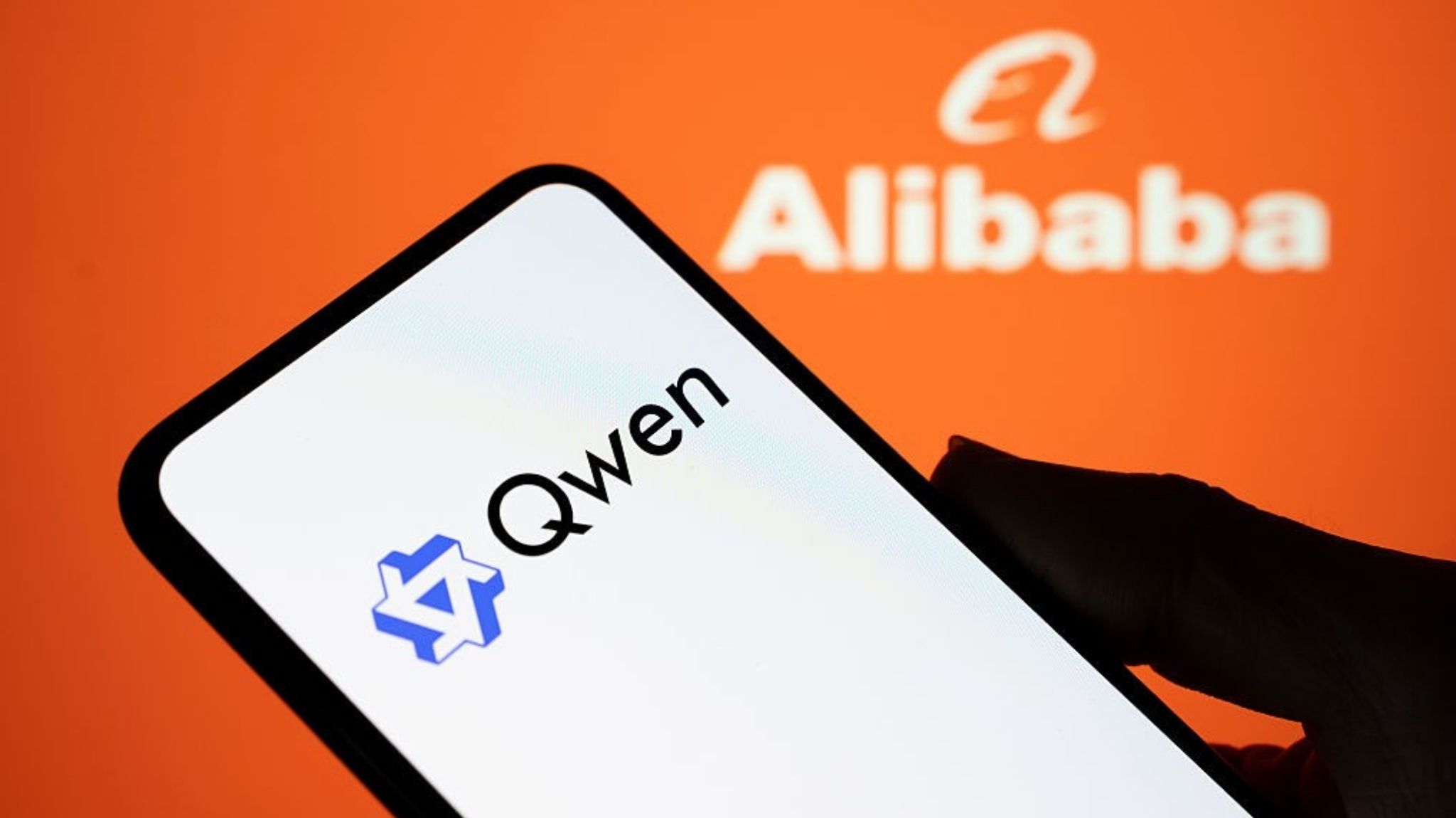
Alibaba Group has launched its latest open-source artificial intelligence model, Qwen3.6-27B, marking a major shift in the competitive AI landscape. Despite its compact size of 27 billion parameters, this dense language model has outperformed premier proprietary rivals from Silicon Valley—including versions of OpenAI’s ChatGPT and Google’s Gemini—across key software engineering and coding benchmarks.
The model achieved top scores on specialized evaluation platforms designed to test real-world developer capabilities. On SWE-bench Verified, an industry standard that measures an AI’s capacity to resolve authentic software bugs in complex codebases, Qwen3.6-27B demonstrated superior problem-solving skills compared to its larger competitors. It also led the field on Terminal-Bench, highlighting its proficiency in executing intricate command-line tasks and managing multi-step engineering workflows.
Alibaba’s breakthrough underscores the rising efficiency of open-source AI. By leveraging optimized architecture and high-quality training datasets, Qwen3.6-27B delivers agentic coding capabilities and advanced logical reasoning without requiring the massive computational infrastructure typical of closed-source systems. This design translates to significantly lower operational and cloud infrastructure costs for enterprises deploying the technology.
The open-source nature of the Qwen release allows global developers to freely download, customize, and integrate the model into local workflows. This democratization of high-tier coding assistance enables small development teams to access capabilities previously restricted to tech giants.
Industry analysts note that this release challenges the assumption that larger, proprietary models inherently hold an advantage in technical disciplines. As open-source models close the performance gap in complex reasoning domains like computer programming, the battle for AI dominance is moving away from brute-force scale and shifting toward architectural efficiency and accessibility.