

Quick Heal detects more than 631,000 threats on Android devices in Q2 2018

 Drawing attention to the scale of cybersecurity challenge that India currently faces, leading IT security solutions provider Quick Heal Technologies has released the Quick Heal Quarterly Threat Report Q2 2018. As per the report, more than 631,000 threats were detected on Android devices of individuals and enterprise users across India between April and June 2018.
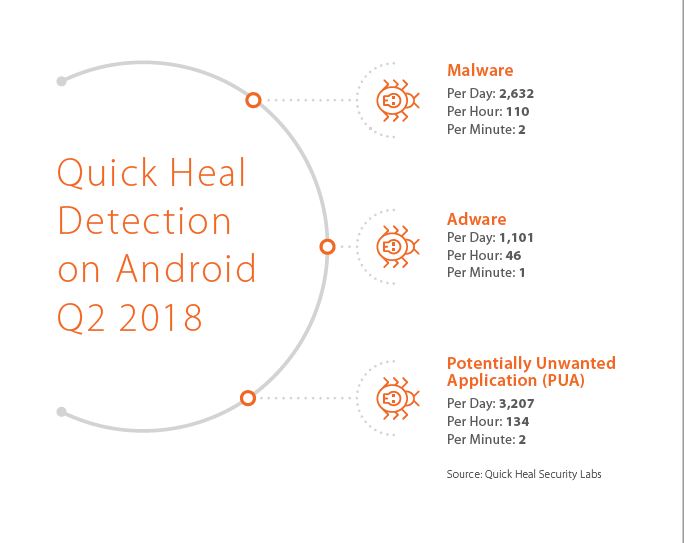
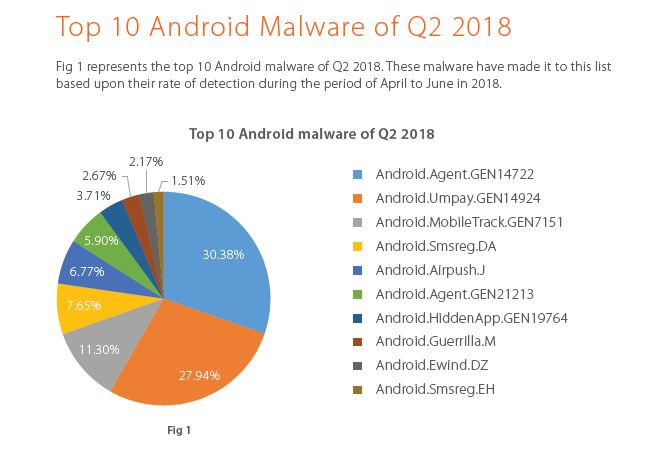 On a daily basis, Quick Heal detected more than 2,000 malware, 3,000 potentially unwanted applications (PUAs), and 1,000 adware. The top ten Android malware of Q2 2018 include Android.Smsreg.DA, Android.Airpush.J,and Android.Guerrilla.M, amongst others, which were propagated through third-party app stores. The PUA family comprised 46.2% of the total detections in the year. All security incidents were successfully resolved by Quick Heal.
 Speaking on the data, Sanjay Katkar, Joint Managing Director & Chief Technology Officer – Quick Heal Technologies, said, “While a growing number of people are now installing state-of-the-art security solutions on larger devices such as desktops and laptops, they often do not take mobile threats seriously. This is a major security loophole. Smartphones hold a lot of personal and financial information and are increasingly being used to transact online. They are also being used in BYOD-led workplaces to handle sensitive business data. The failure to install adequate mobile security puts all of this data at risk. This massive cybersecurity gap is what we are aiming to draw attention to with our latest Quarterly Threat Report.”
 According to data from the Quick Heal report, the number of cryptomining malware hits in Q2 increased as compared to Q1. The report also highlighted the growing threat of Banking Trojans, which imitate popular social and banking apps used in India to gain access to security permissions on infected devices and steal users’ banking credentials.
