As we move towards an economy that is highly volatile, we realise that the primary function of procurement is no longer limited to cost control. It has been used effectively to accelerate long-term growth, increase competitiveness, and ensure the continuity of a business. In today’s world, each enterprise has become increasingly subject to tensions related to geopolitics, disruptions in the supply chain, pressures due to inflation, and the adverse effects of the pandemic. Businesses are now remodelling how they analyse and eventually optimise their supply chains. They have now been facing a new challenge, which is to balance the cost efficiency of their business with its resilience.
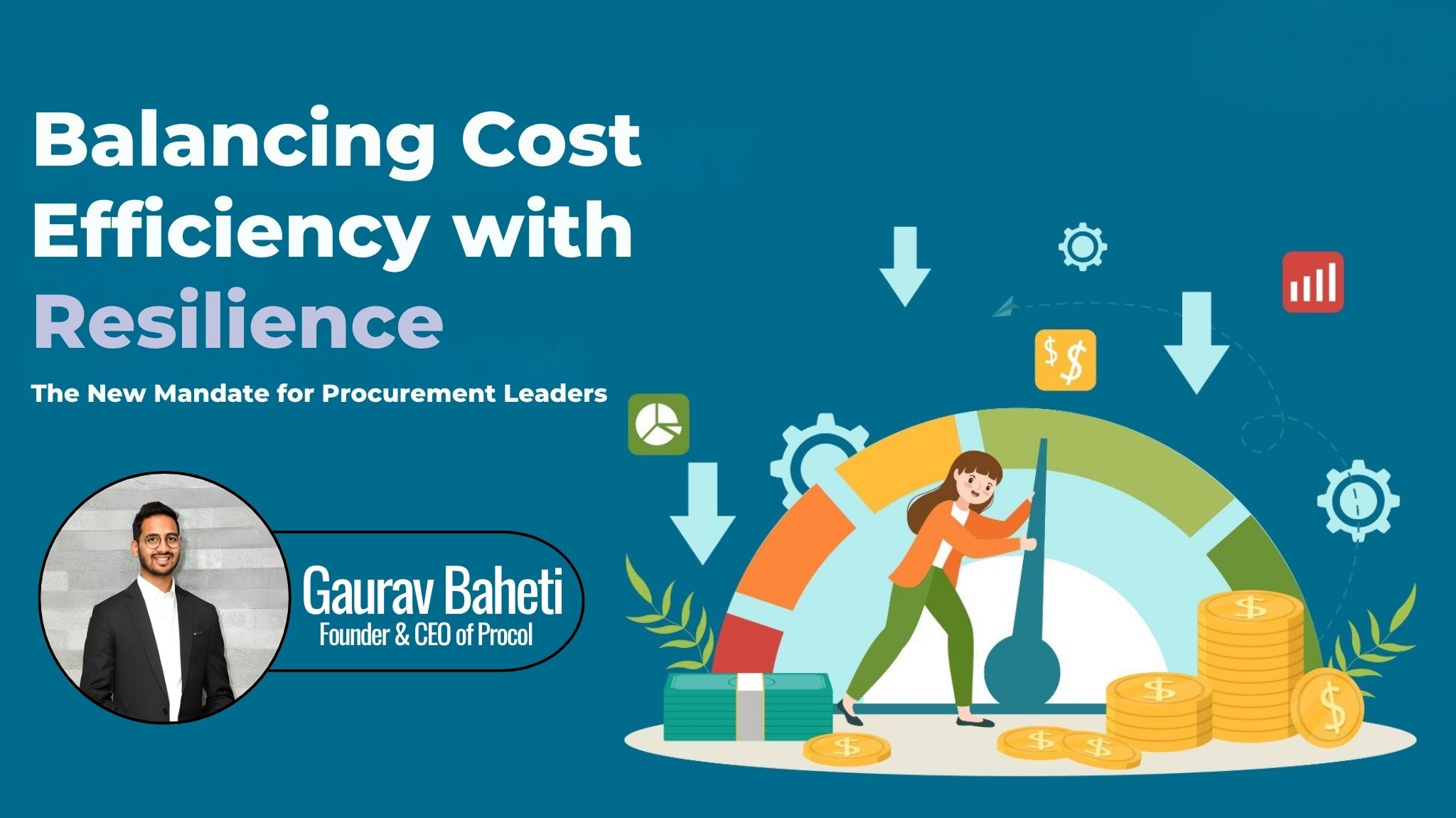
This whole act of balancing needs to be more strategic in the long run. If an organisation over-prioritises its costs, it can be left to an increased risk of exposure. On the other hand, if they are focused only on increasing their resilience, they can significantly erode their profit margins. Companies need to come up with a procurement strategy that can integrate both these fundamental objectives.
How Has Procurement Transitioned From Being Cost-Centric to Value-Centric?
Cost savings were earlier considered to be the only measure of success for procurement. The ultimate goals usually comprise driving the economies of scale, negotiating the lowest prices, and consolidating the suppliers. As a result, the supply chains became over-cost-optimised. These supply chains were fragile, and they were more exposed to the disruptions associated with a modern economy.
Earlier, most of the organisations were centred around a single supplier, and they also relied on geographically concentrated sourcing. This ultimately led to huge setbacks in the case of disruptions. If the procurement models were focused on the costs, it eventually led to increased costs, shortages, and delays. This led to a need for a value-centric approach for procurement models, which included factors such as exposure to risk, sustainability goals, reliability of the suppliers, and the total cost of ownership. With this approach, organisations can make decisions that are more informed, and they also help increase the resilience of the supply chains.
What Is The Importance of Resilience In A Supply Chain?
In a procurement model, resilience refers to the ability of an enterprise to predict, analyse, and recover from the disruptions caused in a supply chain. It should also imply that the organisation can ensure continuity of the business in the long run. The risk does not entirely get eliminated, but it is managed and mitigated in a more effective manner. If a supply chain becomes more resilient, it would have the following characteristics:
- Diversification of the suppliers
- Stronger relationships with the suppliers
- Increased visibility and risk monitoring
- Making the sourcing strategies more agile
To achieve this outcome, a company would need to put in the required time and effort, and also a significant amount of investment. If a company does not achieve resilience, it stands at risk of damaging its reputation, losing its revenue, and facing greater operational downtime.
Achieving Cost-Efficiency For The Organisation
Apart from being resilient, a company also needs to achieve the highest level of cost-efficiency. As the enterprises are bound to operate within a set financial limit, the process of procurement can help them achieve the desired level of profitability. Currently, the parameters that had defined cost-efficiency have evolved with the changing market conditions. The sole aim of a company does not involve achieving the lowest possible upfront cost price. Instead, companies now want to optimise the costs across the whole lifecycle of the supply chain.
Achieving this goal would include reducing inefficiencies and wastes, improving forecasts related to demand, making use of the best available digital tools to get better spend analysis, and coming up with contracts that are able to balance both price and flexibility. The leaders involved in the procurement process must ensure that they move beyond the traditional methods of cost-cutting. They must prioritise smart ways of managing costs and try to get the best returns on investment.
Does The Enterprise Stand At A Crossroads Due To This Changing Strategy?
Trade-offs are often the result of trying to strike the right balance between resilience and cost-efficiency. A company might feel confused between single-sourcing and multi-sourcing options. Single sourcing options carry a greater risk but reduced costs. On the other hand, multi-sourcing options can prove to be more resilient but also more expensive.
Similarly, a company might want to choose between global and local sourcing options. Global suppliers might come with advantages related to the cost, which would cause fewer inefficiencies related to logistics, and also faster response times. Companies might also want to choose between safer stocks and lean inventory. The holding costs could be reduced with the help of lean models, but they could lead to little or no buffer time for the companies. On the other hand, a company could increase its resilience by maintaining a safety stock at a higher cost.
The Road Ahead
As we continue to work in an uncertain environment, we will need to change the rules of the procurement process. To successfully navigate through the complexities, a company would be required to make decisions that are more data-driven. This would help them achieve a balance between resilience and cost-efficiency. In the long run, the function of the procurement channels will not be limited to saving costs. It will also be able to achieve sustainable growth with the help of the required levels of innovation. All of these efforts together would enable the organisations to make use of the available opportunities and also mitigate the disruptions in the best possible manner.
Companies would eventually face the strategic necessity of balancing their cost with resilience. They would need to move away from the traditional models, which are able to achieve only a singular objective. All enterprises would be required to follow a more comprehensive approach, which would enable them to achieve long-term value creation.
To achieve the perfect balance between cost-efficiency and resilience, companies need to make use of the latest digital tools and also build stronger relationships with their suppliers. In this way, enterprises will be able to reap greater rewards in the future. They will be able to improve their operational efficiency and also gain a competitive advantage in the global market.